Oppo OPPO Reno15 Pro Mini 5G (CPH2813)
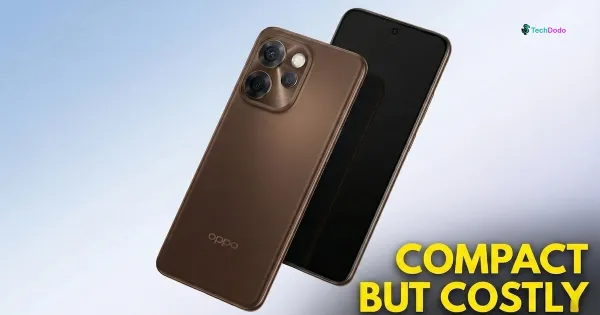
Price (MRP): ₹59,999.00
OPPO Reno15 Pro Mini Review: Compact and Capable — But Is ₹60K Too Steep?
Ratings
Overall
Design
Performance
Features
Value
Pros & Cons
Pros:
- Versatile Triple Camera: The 200MP main + 50MP telephoto + 50MP ultrawide setup covers almost every scenario, with GSMArena noting excellent portrait edge detection
- Tank-Like Durability: IP66/IP68/IP69 ratings with Gorilla Glass 7i, Sponge Bionic Cushioning, and aerospace-grade aluminum frame
- Exceptional Battery Life: Smartprix reports 9-10 hours screen-on time, charging from 0-100% in ~55 minutes with included 80W charger
- Software Longevity: 5 years of Android updates and 6 years of security patches matches flagship commitments
- Box Contents Done Right: 80W charger, case, and pre-applied screen protector included — a rarity at any price
Cons:
- LTPS Instead of LTPO: The 120Hz display lacks dynamic refresh rate adjustment, impacting battery efficiency at this price point
- UFS 3.1 Storage: Competitors like OnePlus have moved to UFS 4.0 — you're paying flagship prices for last-gen storage
- Camera Inconsistency: 91mobiles notes noticeable color and exposure shifts when switching between 1X and 2X modes
- Slippery Glass Back: Multiple reviews mention the completely smooth finish lacks grip during extended use
- Not Actually "Mini": At 6.32 inches, some GSMArena users argue this isn't a true compact — Samsung S24 is 6.2"
⚡ Verdict
The OPPO Reno15 Pro Mini delivers what compact phone enthusiasts have been asking for: flagship cameras, excellent battery life, and premium build in a pocket-friendly size. It's best for content creators and photography enthusiasts who prioritize one-handed usability over raw benchmark scores. However, the ₹5,000 premium over better-specced rivals like the OnePlus 13s makes this a harder recommendation unless the compact form factor is non-negotiable for you.
Scroll for specs, ratings, and where to buy.
Detailed Review
The spec sheet screams flagship. The price tag screams premium. But the one thing the OPPO Reno15 Pro Mini screams loudest? "Finally, someone remembered small hands exist."
In a market where 6.7 inches is considered "standard," OPPO has done something quietly radical: launched a 6.32-inch phone that refuses to compromise on the stuff that actually matters.
Quick Take
What it is: OPPO's first compact flagship in the Reno series — same Dimensity 8450 chip and 200MP camera system as the larger Reno15 Pro, crammed into a body that's easier to use with one thumb.
Who it's for: Photography enthusiasts, content creators, and anyone tired of phones that feel like holding a small TV. If you've been waiting for an Android alternative to the iPhone 16, this is OPPO's answer.
The reality check: You're paying a ₹5,000 premium over the OnePlus 13s for a smaller screen and weaker processor. The question is whether the compact form factor justifies that tax.
Design: Small Phone, Big Presence
OPPO's new HoloFusion back panel is the first thing you notice — and it's not subtle. Per OPPO's official announcement, thousands of nano-engraved micro-curved structures create a ribbon-like pattern that shifts as light hits it. Editorji's review calls it "not loud or flashy" while adding "personality without trying too hard."
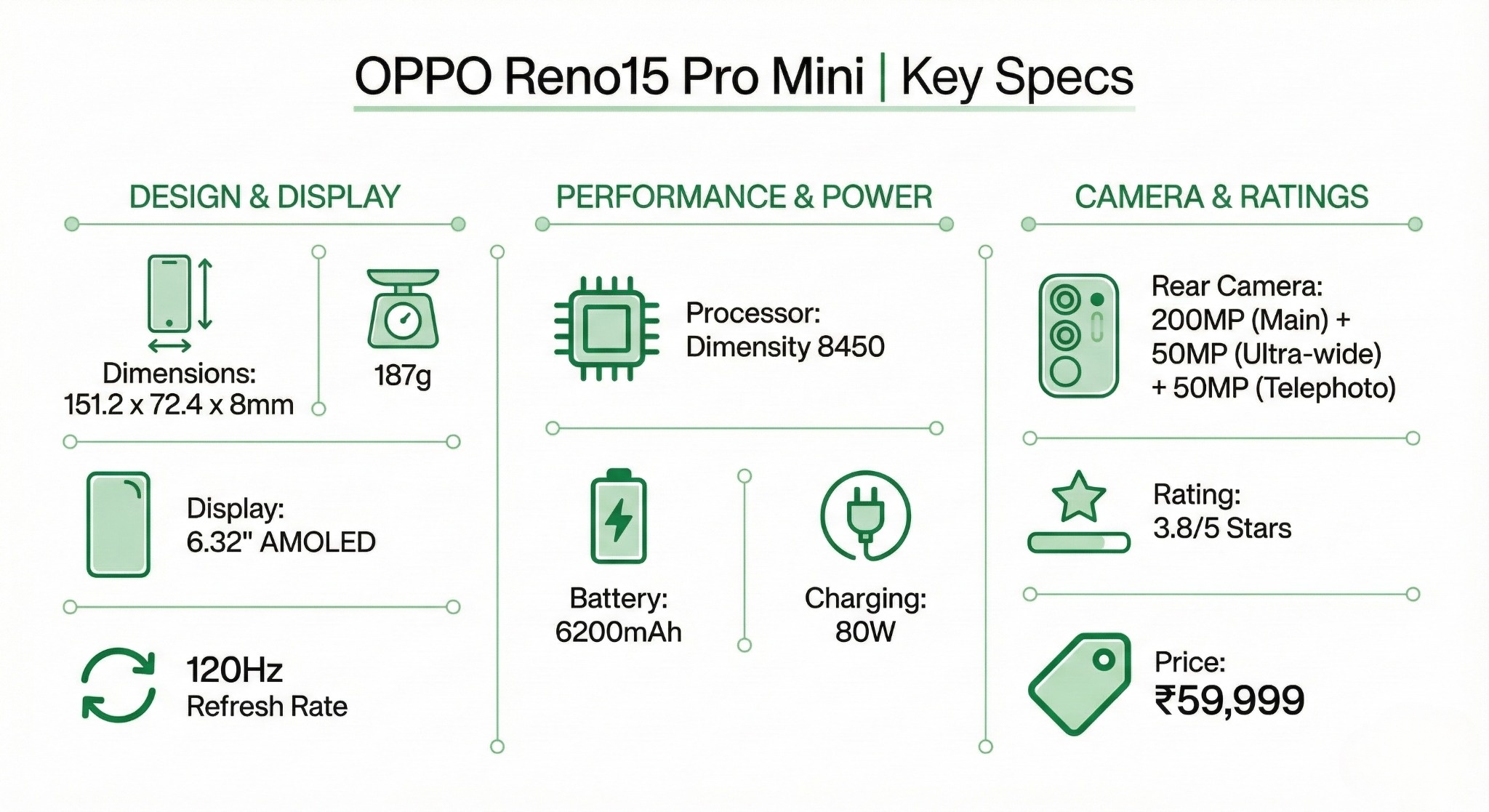
The phone measures 151.2 x 72.4 x 7.99mm and weighs 187g according to GSMArena's specs. That's meaningful: you can actually reach the top of the screen without performing finger gymnastics. 91mobiles' first impressions note the phone "never feels toy-like, but also never feels unwieldy."
But here's the catch: that glass back is completely smooth. Multiple reviews mention missing a bit more grip during longer scrolling sessions. You'll want to use the included TPU case — or develop an unhealthy attachment to PopSockets.
Durability is where OPPO went overboard in the best way. The Reno15 Pro Mini carries IP66, IP68, and IP69 ratings — that last one means it can handle high-pressure water jets. Add Corning Gorilla Glass 7i protection and OPPO's internal Sponge Bionic Cushioning, and this phone seems built to survive Indian monsoons and accidental chai spills alike.
Display: Good Enough, Not Great
The 6.32-inch AMOLED panel runs at 1216 x 2640 resolution with 120Hz refresh rate. GSMArena lists brightness at 600 nits typical, boosting to 1800 nits in direct sunlight, with peak HDR brightness hitting 3600 nits.
Smartprix's review confirms "outdoor visibility is solid" and praises the high-frequency PWM dimming for comfortable nighttime use. The 1.6mm bezels contribute to a 93.35% screen-to-body ratio per OPPO's specs.
Here's what's missing: this is an LTPS panel, not LTPO. Translation? The display can't dynamically drop to 1Hz during static content like the Reno15 Pro can. At ₹60,000, that feels like a cost-cutting measure that impacts battery efficiency. The Vivo X200 FE in this price range uses LTPO — and hits 5000 nits peak brightness versus this phone's 3600.
Performance: Competent, Not Class-Leading
The MediaTek Dimensity 8450 running this show is built on a 4nm process. NanoReview lists benchmark scores around 1609 single-core and 6381 multi-core on Geekbench 6, with AnTuTu scores hovering near 1.64 million.
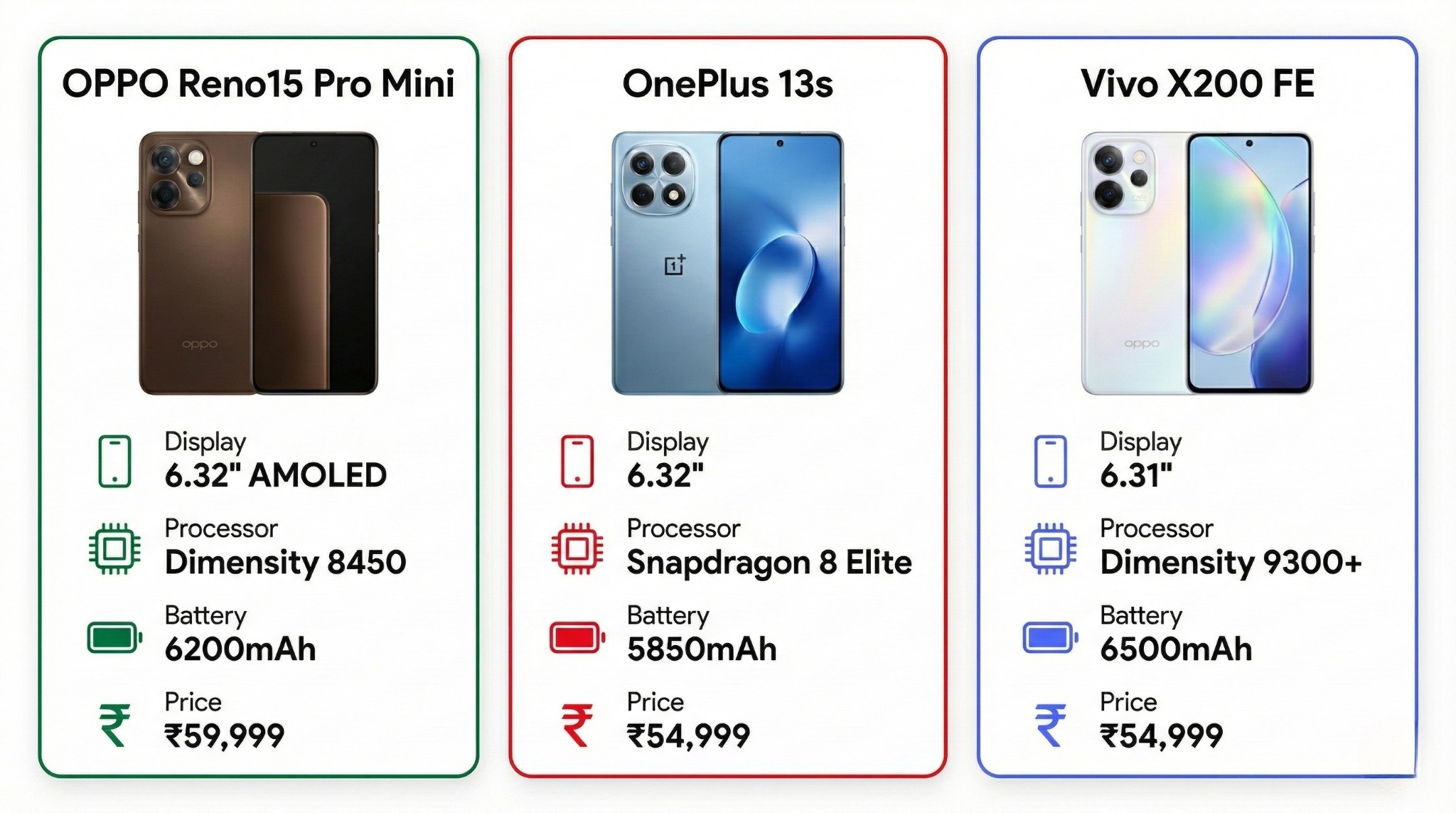
For context: the OnePlus 13s at ₹54,999 packs the Snapdragon 8 Elite, which demolishes these numbers. If raw performance is your priority, the math doesn't favor the Reno15 Pro Mini.
Smartprix reports "BGMI runs at 90 fps natively, with an optional frame boost mode that pushes it to 120 fps" — averaging around 108fps in boost mode. That's solid for most gamers, though dedicated mobile gaming enthusiasts will find better performance elsewhere.
Day-to-day use is where the phone shines. 91mobiles' first impressions describe "fluid and responsive" performance with "animations smooth, app switching quick." ColorOS 16 on Android 16 handles scheduling well, keeping the experience polished rather than aggressive.
The 12GB LPDDR5X RAM ensures multitasking stays smooth. Storage is UFS 3.1 in 256GB or 512GB options — notably a step behind the UFS 4.0 found in competing flagships. There's no microSD expansion either.
Camera: The Main Event
This is where OPPO wants to justify that ₹60K price tag, and honestly? They mostly succeed.
The headline is a 200MP main sensor with f/1.8 aperture and OIS. It's joined by a 50MP ultrawide (f/2.0, 116° FOV) and a 50MP telephoto with 3.5x optical zoom and OIS. The front camera is a 50MP ultrawide with autofocus and 100° field of view — serious hardware for selfies and video calls.
Smartprix's review notes "in good lighting, detail is excellent. Textures look clean, edges are sharp, and dynamic range is mostly good." The 200MP sensor is designed for cropping flexibility — you can reframe shots significantly without losing detail.
Portrait mode gets special praise across reviews. 91mobiles calls subject separation "clean" with "skin tones pleasing" and highlights the smooth 1X to 3.5x zoom in portrait mode, which makes framing more deliberate than fixed focal lengths.
OPPO's PureTone Technology, tuned specifically for Indian skin tones according to the company's press materials, does seem to produce more natural-looking photos in mixed lighting conditions. Editorji's review describes "fewer blown highlights and more stable exposure."
The catch? 91mobiles notes "one issue is consistency when switching between 1X and 2X. Exposure and color tone shifts are noticeable and should be smoother." That's the kind of software polish that separates good from great.
Video recording supports 4K at 60fps HDR across all cameras — front, main, ultrawide, and telephoto. That's impressive versatility for a compact phone, and footage stays smooth with EIS 2.0 stabilization even when shooting handheld.
Battery: The Compact Phone Curse, Broken
You'd expect a smaller phone to mean smaller battery life. OPPO apparently didn't get that memo.
The 6200mAh cell is massive for this form factor — only 300mAh less than the larger Reno15 Pro. Smartprix reports "screen-on time close to 9-10 hours" with "social media, calls, messaging, photos, music, and constant 5G" use. Standby drain is described as "very low."
The included 80W SuperVOOC charger takes the phone from near-empty to full in about 55 minutes according to multiple reviews. It also supports 33W PPS charging for third-party chargers and 13.5W PD — useful flexibility.
For comparison: the OnePlus 13s has a 5850mAh battery, while the Vivo X200 FE matches at 6500mAh. The Reno15 Pro Mini sits comfortably in competitive territory.
Software: ColorOS 16 Brings the Polish
Running Android 16 with ColorOS 16 out of the box, the phone gets 5 years of Android updates and 6 years of security updates — matching what OPPO offers on the flagship Find X series.
ColorOS 16 brings features like AI Mind Space for contextual organization, call summaries, live translation, and smart transcription. Whether these AI features prove useful day-to-day will depend on how consistently they work for you.
The interface uses what OPPO calls "light field design" — gradient blur and halo effects that feel premium without being distracting. Flux Home Screen lets you dynamically resize and reposition icons, and icon colors can automatically match wallpaper tones.
India Variant Check
Good news: the India variant matches the global model. Per OPPO India's spec sheet, you get:
- 5G Bands: n1/n3/n5/n8/n26/n28B/n38/n40/n41/n48/n66/n77/n78 — n78 covers Jio and Airtel 5G networks
- Charger: 80W SuperVOOC included in box
- Warranty: Standard 1-year OPPO India warranty with 180 days screen damage protection as launch offer
- Box Contents: Phone, charger, USB-A to USB-C cable, TPU case, SIM ejector tool, documentation, pre-applied screen protector
Marketing Claims vs Reality
Claim: "Compact flagship without compromises" Reality: You're compromising on processor (Dimensity 8450 vs Snapdragon 8 Elite), display (LTPS vs LTPO), and storage (UFS 3.1 vs 4.0) compared to price-matched rivals. Verdict: ⚠️ Partial
Claim: "200MP Ultra-Clear Main Camera" Reality: The 200MP sensor preserves detail for cropping, and image quality in good light is genuinely excellent. However, mode-switching consistency needs work. Verdict: ✅ True
Claim: "First Pro Mini in India" Reality: OPPO has indeed launched India's first "Pro Mini" variant in the Reno series — this form factor didn't exist in the lineup before. Verdict: ✅ True
Common Questions
Q: Is the OPPO Reno15 Pro Mini good for gaming? A: It handles most games at high settings, with BGMI running at 90fps natively. However, if gaming is your priority, the OnePlus 13s offers significantly better performance for ₹5,000 less.
Q: Does it support 5G on Jio and Airtel? A: Yes. The India variant supports n78 band, which is the primary band for both Jio and Airtel 5G networks.
Q: Is the 80W charger included in the box? A: Yes, unlike some recent launches, OPPO includes the 80W SuperVOOC charger, cable, and a TPU case in the box.
Q: How does the camera compare to the Reno15 Pro? A: They share the exact same camera hardware — 200MP main, 50MP ultrawide, 50MP telephoto. The only difference is form factor.
Q: Should I wait for the Vivo X300 FE or OnePlus 15s? A: If you need a phone now, the Reno15 Pro Mini is a solid choice for compact enthusiasts. If you can wait, both upcoming competitors are rumored to bring spec bumps — Vivo X300 FE is tipped to use Snapdragon 8 Gen 5.
The Bottom Line
The OPPO Reno15 Pro Mini isn't trying to win benchmark wars. It's trying to prove that compact phones don't have to mean compromise — and it largely succeeds.
The camera system is genuinely versatile. Battery life defies the compact form factor. Build quality inspires confidence. And the software commitment (5 years of updates) means this phone should age gracefully.
But that ₹59,999 price tag is where the story gets complicated. The OnePlus 13s offers a more powerful Snapdragon 8 Elite for ₹54,999. The Vivo X200 FE matches battery capacity with a brighter display for the same price. Both use LTPO panels.
If compact size is non-negotiable and you value camera versatility over raw performance, the Reno15 Pro Mini is worth considering. If you're flexible on form factor, the competition offers more bang for your buck.
Who should buy: Content creators, photography enthusiasts, and anyone who's been waiting for a properly equipped small phone.
Who should skip: Performance-focused users, heavy gamers, and anyone who can wait for the Vivo X300 FE.
Specifications
General
Where to Buy
Support our reviews by purchasing through these affiliate links. We may earn a commission at no extra cost to you.
Affiliate Disclosure: Links above are affiliate links. When you make a purchase through these links, we may receive a commission. This helps support our content creation and doesn't affect the price you pay.