
The Finance Minister has a choice: Kill the "grey market" or kill the industry. Here's what Union Budget 2026 means for your wallet.
Quick Answer: Budget 2026 (February 1) is unlikely to cut crypto's 30% tax or 1% TDS despite industry demands. Smartphones will cost 4-9% more despite duty reductions—blame memory chip shortages. Laptops already duty-free but facing ₹5,000+ hikes from component costs.
Every February, India collectively holds its breath. Will the Finance Minister finally address that brutal 30% crypto tax? Will your next phone cost less? Will that gaming laptop become affordable?
This year, the stakes are higher. Budget 2026 arrives as memory chip prices surge 50%, the rupee wobbles, and 107 million crypto investors wonder if relief is coming. Spoiler: the answers aren't what you're hoping for.
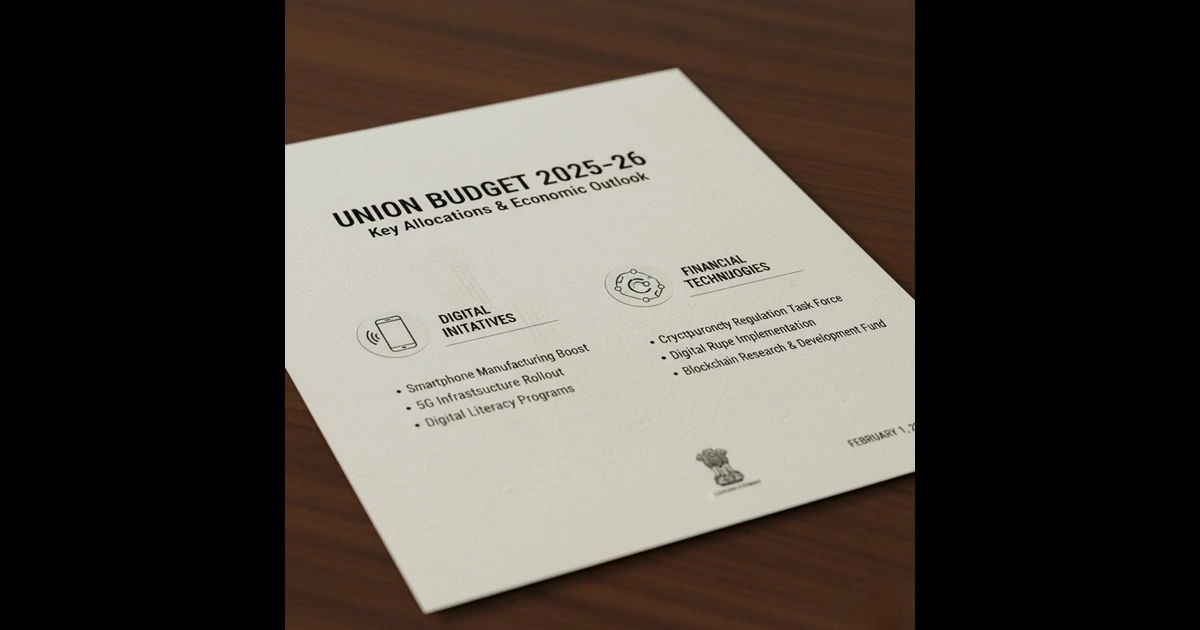
The Crypto Tax Situation: 34% and Counting
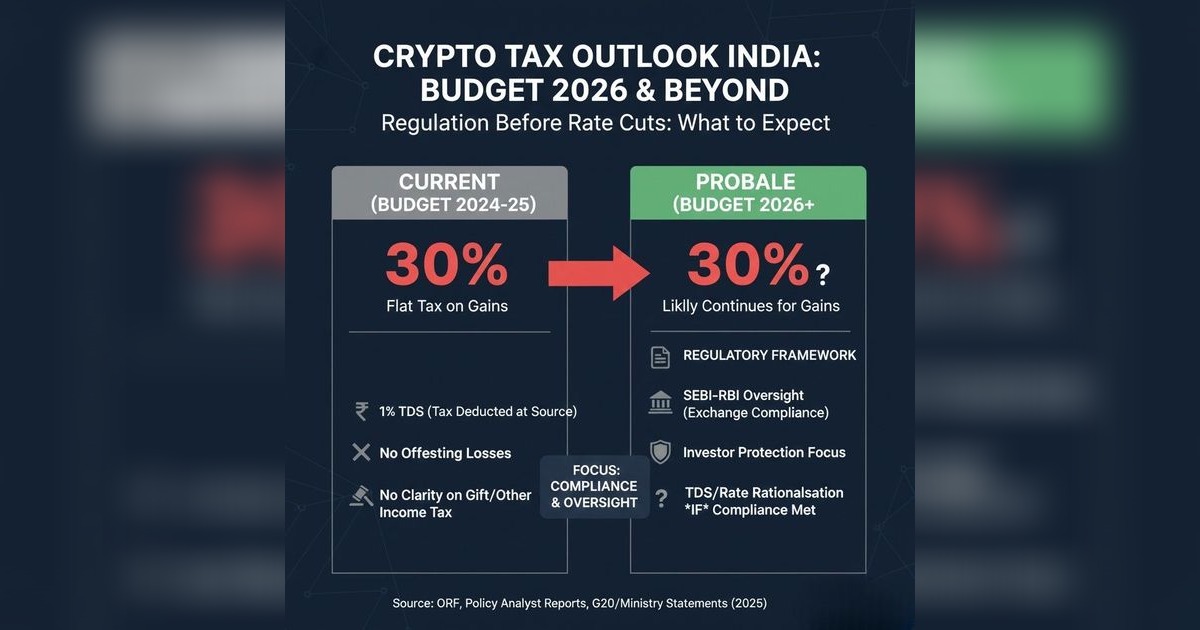
Here's the thing nobody wants to hear: Budget 2025 changed absolutely nothing for crypto taxation. The 30% flat tax on gains? Still there. The 1% TDS on every transaction above ₹50,000? Untouched. The prohibition on offsetting losses? Firmly in place.
But wait, it gets worse.
From July 2025, an additional 18% GST now applies on crypto trading fees across spot, futures, and copy trading. Do the math: you're looking at roughly 34% of your gains going to the government, while 100% of losses stay with you.
The industry has been vocal. CoinDCX, WazirX, and ZebPay have repeatedly demanded TDS reduction from 1% to 0.01%, alignment with equity taxation (15% short-term, 10% long-term), and the ability to offset losses. According to a CoinDCX report, trading volumes on Indian exchanges plummeted 97% between February 2022 and January 2024 after these taxes hit.
Will Budget 2026 Deliver Relief?
Probably not in the way crypto enthusiasts hope.
The Observer Research Foundation and policy analysts suggest India is moving toward a "regulated digital asset" framework rather than outright tax relief. A joint SEBI-RBI oversight committee is reportedly in the works for 2026, focusing on investor protection and exchange compliance rather than rate cuts.
The G20's stance—that outright bans are "counterproductive and impractical"—gives some hope. But Finance Ministry officials have signalled that crypto regulation will precede any tax rationalisation.
Translation: Expect compliance requirements and exchange oversight before TDS cuts. The 30% rate likely stays for Budget 2026.
The Smartphone Paradox: Cheaper to Make, Costlier to Buy
This is where things get genuinely counterintuitive.
Budget 2025 removed the 2.5% basic customs duty on printed circuit board assemblies (PCBAs), camera module parts, USB cables, and fingerprint scanner components. Earlier, duties on mechanical parts dropped from 15% to 10%. On paper, phones should cost less.
In reality? Counterpoint Research projects smartphone prices will rise 6.9% in 2026. CMF India's VP Himanshu Tandon has explicitly warned that budget segment phones will see 4-6% hikes, mid-range 6-8%, and flagships 7-9%.
The Memory Chip Problem Nobody's Discussing
Here's the culprit: memory chip prices have surged 50% since January 2025, with another 40% increase projected for Q2 2026.
Why? Samsung, Micron, and SK Hynix are prioritising high-bandwidth memory (HBM) chips for AI data centres over the DRAM modules that go into your phone. The AI boom is literally cannibalising smartphone affordability.
Xiaomi India has confirmed they're tracking these pressures and anticipating "broader price revisions" in 2026. The 1-2% savings from duty cuts get swallowed whole by 8-15% component cost increases.
The hard truth: Your next ₹20,000 phone might cost ₹21,500-₹22,000 regardless of what the Budget does.
What About Gaming Laptops?
Here's something most analysis misses: laptops already have zero import duty under India's Information Technology Agreement (ITA-1) commitments. The Budget can't cut what's already at zero.
The Import Management System requiring registration for laptop imports continues, but it doesn't add costs—just paperwork. Gaming laptops face the same memory chip squeeze as phones, potentially adding ₹5,000-15,000 to flagship models.
What Budget 2026 Will Probably Do
Based on EY India's pre-budget analysis and Deloitte's expectations report, here's the realistic outlook:
For Crypto:
- Enhanced reporting requirements under Schedule VDA (already effective April 2026)
- Possible regulatory clarity through a dedicated crypto framework
- TDS threshold adjustments (maybe from ₹50,000 to ₹5,00,000) rather than rate cuts
- No reduction in the 30% tax rate
For Electronics:
- Further tariff simplification (now down to 8 slabs from previous complexity)
- Continued duty exemptions on EV battery components
- Possible incentives under the Production-Linked Incentive (PLI) scheme for semiconductors
- No magic solution for global component shortages
For Your Wallet:
- Crypto: Status quo with stricter compliance
- Phones: 4-9% price increase despite duty cuts
- Laptops: Duty-neutral but ₹5,000+ premium from component costs
- TVs: Potentially cheaper (open cell duty cut to 5%)
People Also Ask
Is cryptocurrency legal in India in 2026?
Yes. Cryptocurrencies are legally classified as Virtual Digital Assets (VDAs) under the Income Tax Act. You can buy, sell, and hold crypto legally. However, crypto cannot be used as legal tender for payments—the RBI actively discourages this while promoting its Digital Rupee (CBDC) instead.
How much tax do I pay on crypto profits in India?
Flat 30% on gains with no deductions except acquisition cost, plus 1% TDS on transactions above ₹50,000. Add 18% GST on trading fees from July 2025. Losses cannot be set off against gains or other income. Effective burden approaches 34% of profits.
Will smartphone prices decrease in 2026?
Unlikely. Despite duty reductions worth 1-2%, memory chip shortages and rupee depreciation will push prices 4-9% higher across segments. Budget-friendly phones (₹10,000-₹20,000) will see 4-6% increases; flagships could rise 7-9%.
When is Union Budget 2026 being presented?
February 1, 2026 (a Sunday). Finance Minister Nirmala Sitharaman will present her ninth consecutive budget. Despite the weekend, stock markets are expected to remain open for immediate reaction.
The Bigger Picture: Regulation Over Relief
Here's the pattern that matters: India isn't moving toward tax cuts—it's moving toward structured regulation.
The 2022 tax framework was a blunt instrument, designed more to discourage speculation than enable innovation. But the approach is evolving. SEBI's proposed multi-regulator framework, FIU-IND's compliance crackdowns on offshore exchanges (Binance faced ₹722 crore GST notices), and mandatory exchange registration all signal a maturing ecosystem.
For electronics, the PLI scheme has attracted genuine investment. Apple's contract manufacturers now produce iPhones worth ₹1.2 lakh crore annually in India. Mobile phone exports crossed ₹1.2 lakh crore in FY24.
The Budget isn't just about tax rates—it's about where India positions itself in global tech supply chains.
The Verdict: Manage Expectations
Don't expect Budget 2026 to solve your crypto tax frustrations or make that gaming laptop affordable. The forces driving costs—global chip shortages, currency fluctuations, AI infrastructure demand—operate beyond FM Sitharaman's control.
What you can expect: continued regulatory maturation, possible threshold adjustments, and the slow grinding forward of domestic manufacturing incentives.
The Finance Minister's choice isn't really between killing the grey market or the industry. It's about building infrastructure for a regulated digital economy—even if that means short-term pain for crypto traders and smartphone buyers.
Your next laptop might cost ₹5,000 more. Your crypto gains will still lose 34% to taxes. And that's probably not changing on February 1.
We'll update this analysis when Budget 2026 is presented. Enable notifications or bookmark this page.