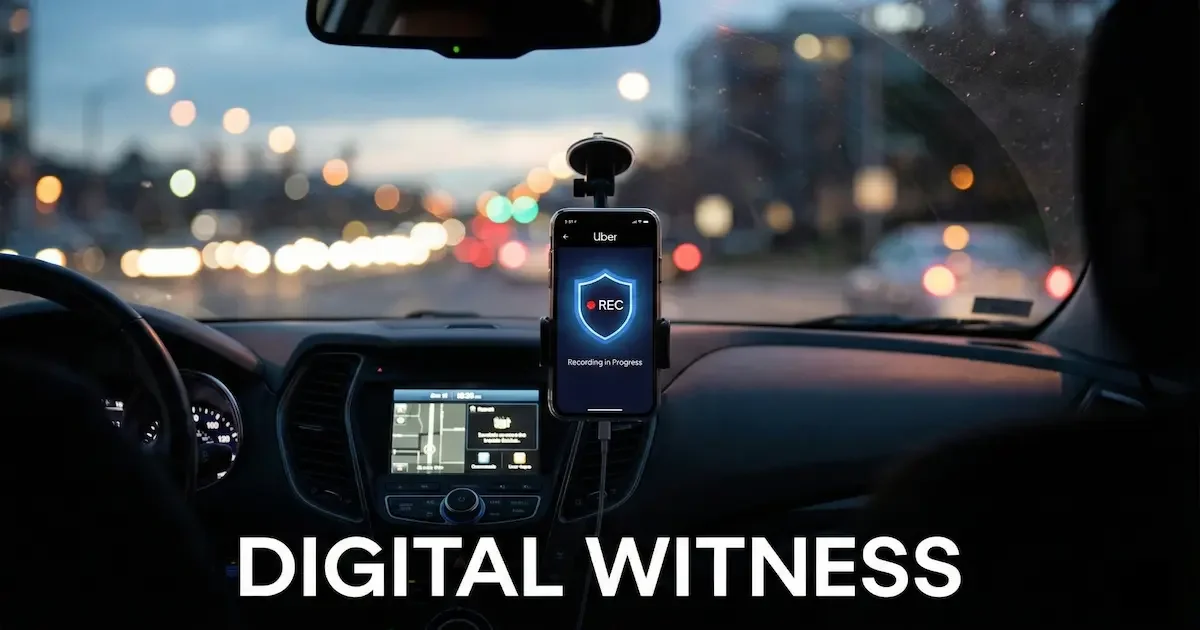
Uber India’s New Digital Eye: Why Your Next Ride Might Be Recorded
Let’s be honest: getting into a stranger’s car is arguably the weirdest social contract we’ve all just accepted. Most of the time, it’s fine. You sit in the back, check your emails, and ignore the driver's questionable playlist.
But when things go south—a dispute over the AC, a weird route deviation, or allegations of misconduct—it quickly becomes a chaotic game of "He Said, She Said." And in India, where dashcams are still a luxury rarity (costing anywhere from ₹5,000 to ₹15,000), there is rarely objective evidence.
Uber is trying to fix this.
As of November 2025, the ride-hailing giant has rolled out a significant pilot program: In-app Video Recording. This isn't just audio (which they launched previously); this is full video capture using the driver’s own smartphone selfie camera.
If you live in one of India’s top metros, your next ride might be filmed. Here is the deep dive on why this is happening, how it works, and whether you should be worried about your privacy.
The "What": Your Driver’s Phone is Now a Dashcam
Previously, if a driver wanted to record the cabin for safety, they needed to buy an external dashcam—a hardware cost most gig workers in India simply can't justify.
Uber’s engineering solution is clever: leverage the hardware they already have. The new feature allows drivers to use their smartphone’s front-facing camera to record both video and audio of the trip.
The Pilot Cities
As of today, December 9, 2025, this feature is live in 10 cities:
- Delhi NCR
- Mumbai
- Bengaluru
- Chennai
- Pune
- Hyderabad
- Chandigarh
- Kolkata
- Jaipur
- Lucknow
The "Why": Protecting the Driver (And You)
Why push this now? The data points to a rising number of "false flag" complaints. Drivers in India frequently report being threatened with false complaints by riders trying to evade cancellation fees or disputing routes. Conversely, riders have valid concerns about harassment and safety, particularly during late-night comminutes.
By creating a digital witness, Uber aims to:
- Deter Misconduct: People tend to behave better when they know a camera is rolling.
- Speed Up Disputes: Instead of a three-day investigation, a video clip can settle a "rude behavior" ticket in minutes.
- Bridge the Trust Gap: Both parties have insurance against lies.
The "So What": Privacy and The "Black Box" Approach
This is the part where everyone gets nervous. "Is Uber watching me pick my nose in the back seat?"
Technically, no. Uber has deployed what I call a "Black Box" protocol. Here is how the privacy architecture works, based on their official documentation:
- Encryption is Key: The video files are encrypted directly on the driver's device.
- No Live Streaming: The driver cannot watch the livestream while driving (that would be a distraction).
- The "Locked" Vault: This is the most important part—nobody can watch the video. Not the driver. Not Uber. Not you.
- The Key to the Vault: The only time a video is decrypted and viewed is if a Safety Report is filed. If the driver or rider reports an incident, the file is attached to the ticket and sent to Uber’s specialized safety team.
- Auto-Deletion: If no dispute is raised within 7 days, the footage is automatically nuked from the phone to save storage and privacy.
Note: You will always know if you are being recorded. The app will notify you with a pop-up when your driver has this feature enabled.
Tech Specs: How It Actually Works
For the tech-curious, here is the workflow:
- Setup: Drivers enable "Record My Ride" in the Safety Toolkit.
- Hardware: It utilizes the front camera. The app manages resource allocation to ensure the recording doesn't overheat the phone or kill the battery (a major engineering challenge Uber solved during the US pilot in 2022).
- Storage: Files are stored locally on the device (sandbox storage), not the cloud, until uploaded.
- Network: Uploads only happen if a claim is filed, saving the driver’s mobile data.
Comparative Analysis: Uber vs. The Rest
How does this stack up against the competition in India?
Feature | Uber India | Ola | Rapido |
In-App Video | Yes (Pilot in 10 cities) | No (External Dashcam only) | No |
Audio Recording | Yes (Nationwide) | No | No |
Emergency Button | Yes | Yes | Yes |
Hardware Cost | ₹0 (Uses Phone) | ₹5k+ (Driver buys Dashcam) | N/A |
What Experts Are Watching
While this is a net positive for safety, there are risks involved that we will be monitoring over the next quarter:
- Battery Drain: In India's summer heat, running GPS, Data, and Camera simultaneously is a recipe for overheating phones. Will this discourage drivers from using it?
- Low Light Performance: Most budget smartphones used by drivers have poor low-light sensors. Will the footage actually be usable during a night ride in a dark cab?
- Rider Pushback: Will riders cancel trips when they see the "Recording" notification, fearing privacy invasion despite the encryption promises?
Conclusion
This is a mature move from Uber. By democratizing the "dashcam" via software, they’ve instantly upgraded the safety infrastructure of thousands of vehicles without waiting for drivers to invest in hardware.
It shifts the power dynamic from "Who shouted loudest?" to "What does the data say?" And in the chaotic ecosystem of Indian traffic, an objective witness is exactly what we need.
What you can do: Next time you book an Uber in a metro, check your app notification area. If you see the "Recording" alert, don't panic—it's likely there to keep you safe, not to spy on you.