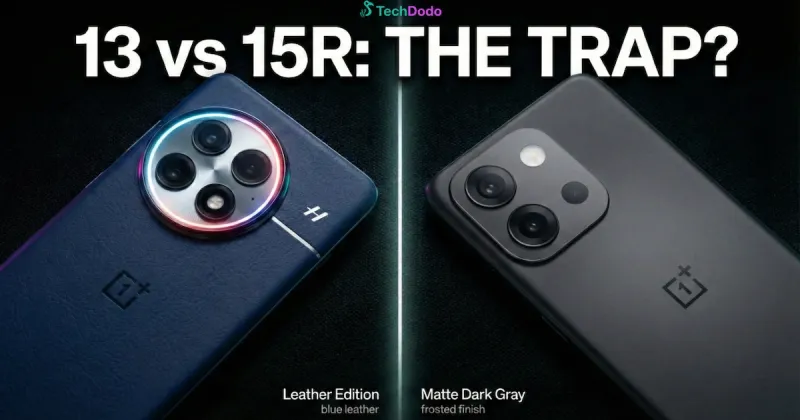
Quick Answer: The OnePlus 13 (₹57,999 with discounts) beats the newer 15R (₹47,999) for most users. Best for photographers and all-rounders. The catch: you're buying last year's phone, but it's genuinely better where it counts.
Here's something OnePlus doesn't want you to think too hard about.
The OnePlus 15R launched in India on December 17, 2025, packed with a shiny new Snapdragon 8 Gen 5 chip and a 7,400mAh battery. According to GSMArena, it's the largest battery OnePlus has ever shipped globally. Sounds like an upgrade, right?
Not so fast.
While you were distracted by bigger battery numbers and higher refresh rates, OnePlus quietly removed the telephoto camera that made the OnePlus 13R worth buying. And they raised the price. This isn't evolution—it's regression dressed up in marketing speak.
The real story? The year-old OnePlus 13, now available at ₹57,999 during the OnePlus Freedom Sale according to News9Live, might be the smarter purchase. Let me break down why.
The Camera Situation Is Worse Than You Think
The OnePlus 15R ships with a dual-camera setup: a 50MP Sony IMX906 main sensor and an 8MP ultrawide. That's it.
GSMArena confirms that the OnePlus 13R—the phone the 15R replaces—had a triple-camera system with a dedicated 50MP telephoto lens offering 2x optical zoom. OnePlus removed an entire camera and called it progress.
OnePlus's justification? Android Central reports that the company claims their "DetailMax imaging engine is so good" they didn't need a telephoto. The reviewer's response was appropriately sarcastic: "Great! Now we can tell OPPO, Vivo, Samsung, Google, Huawei, Honor, and all the other brands to ditch their efforts in this area."
In reality? Digital zoom cannot replace optical zoom. Period. Smartprix's camera review found that while the DetailMax engine delivers decent results at 2x and 3x, anything beyond that shows the 13R's telephoto pulling ahead with sharper detail. For portrait photography specifically, the missing telephoto is "difficult to justify."
The OnePlus 13, meanwhile, packs a triple 50MP Hasselblad-tuned system with a proper 3x telephoto, 120-degree ultrawide, and Sony LYT-808 main sensor. PhoneArena's camera tests gave the OnePlus 13 a score of 145, calling the camera system a "triumph." The 15R? They haven't even finished testing it, but early impressions aren't kind: "I am definitely missing a telephoto lens here."
Is The Display Actually Better?
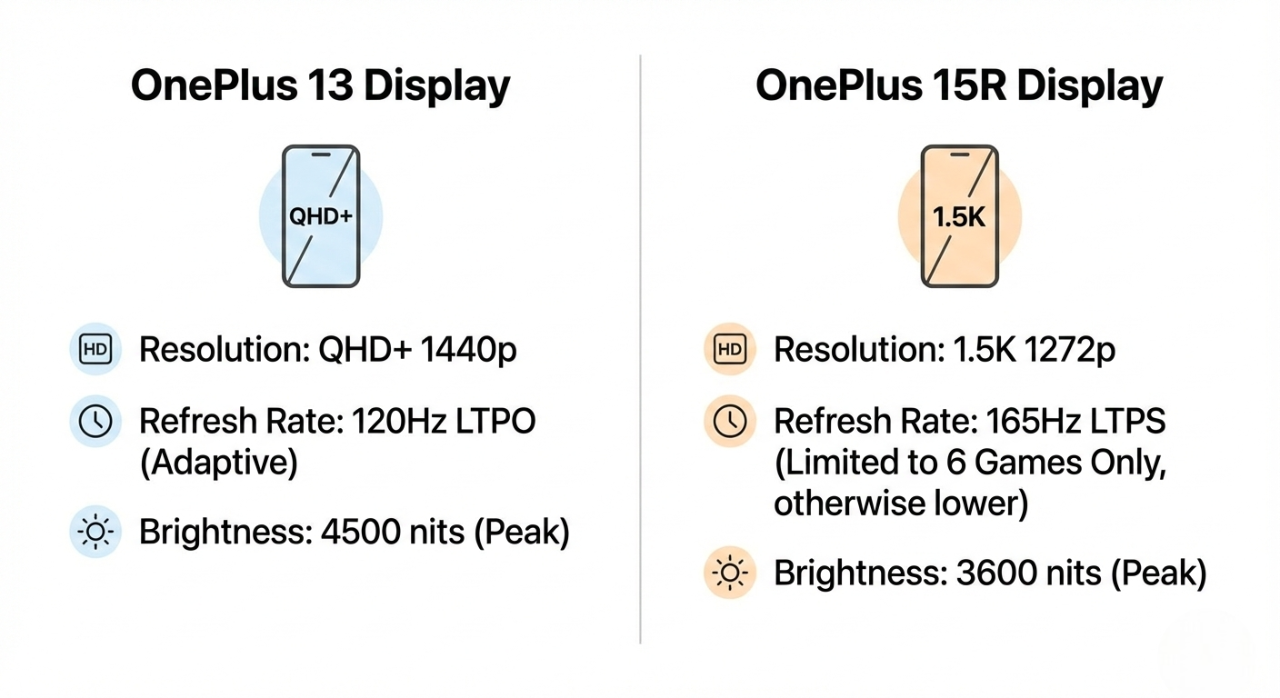
The OnePlus 15R has a 6.83-inch 1.5K (2800×1272) LTPS AMOLED panel with a 165Hz refresh rate. GSMArena notes the display can hit 3,600 nits peak brightness.
But here's what the spec sheet hides.
The 165Hz mode only works in six specific games. GSMArena's hands-on review confirms: "In all other scenarios, you get the same 120Hz refresh as all other devices in this category." So that headline feature? Mostly marketing.
The LTPS panel also can't drop below 60Hz, meaning it consumes more power than the OnePlus 13's LTPO panel, which can dip to 1Hz when displaying static content. This partially explains why the 15R needs a bigger battery to achieve similar endurance.
The OnePlus 13 offers a 6.82-inch QHD+ (1440×3168) display with 510ppi versus the 15R's 450ppi. According to PhoneArena, it achieved an A++ rating from DisplayMate with 4,500 nits peak brightness. The resolution difference is visible when reading fine text or viewing detailed images.
Performance: Does The Newer Chip Matter?
The Snapdragon 8 Gen 5 in the 15R is fast. It's also not the flagship chip—that's the Snapdragon 8 Elite Gen 5 found in the OnePlus 15.
GSMArena explains the 8 Gen 5 "makes some substantial downgrades" from the Elite: CPU cores clocked 17% lower, performance cores 8% lower, and a significantly weaker Adreno 829 GPU versus the Elite's Adreno 840.
91mobiles' benchmark testing found the 15R trailing the OnePlus 15 by roughly 700,000 points in AnTuTu and about 10% in Geekbench multi-core. In gaming, the 15R averaged 39.7fps after 30 minutes of BGMI, while the OnePlus 15 managed 79.1fps at higher graphics settings.
Here's the thing though: the OnePlus 13's Snapdragon 8 Elite remains one of the fastest chips available. GSMArena noted it's "among the fastest phones" they've tested, even "outperforming the A18 Pro in some tests."
For everyday use—apps, social media, browsing—you won't notice a difference. Both phones feel instantaneous. The performance gap only emerges in sustained gaming sessions, and even then, the 13 holds its own.
Battery And Charging: The 15R's Genuine Win
Credit where it's due: the OnePlus 15R's 7,400mAh silicon-carbon battery is genuinely impressive. 91mobiles reports the phone "lasts well into the next day with regular use."
The OnePlus 13's 6,000mAh battery isn't small, but it's 23% less capacity. GSMArena's testing gave it an "excellent" Active Use Score of 15 hours 28 minutes, but the 15R should comfortably exceed that.
Charging tells a different story. The OnePlus 13 supports 100W wired charging (35-minute full charge) plus 50W wireless charging. The 15R? 80W wired only. No wireless charging whatsoever.
If you value the flexibility of dropping your phone on a charging pad at your desk or bedside, the 13 wins despite the smaller battery.
What Else Did OnePlus Remove?
The 15R ditched the iconic Alert Slider that OnePlus fans loved. In its place: a "Plus Key" that Android Authority describes as "extremely limited" in functionality. You can't even assign it to open a specific app—just preset functions like Do Not Disturb or flashlight.
The design language changed too. Multiple reviewers describe it as "boring," "forgettable," and "as interesting as a middle seat on a 16-hour flight." The OnePlus 13, with its Midnight Ocean vegan leather option and distinctive circular camera island, still turns heads.
The 15R also caps RAM at 12GB. The OnePlus 13R offered a 16GB variant for RAM-intensive multitasking.
The Price Reality Check
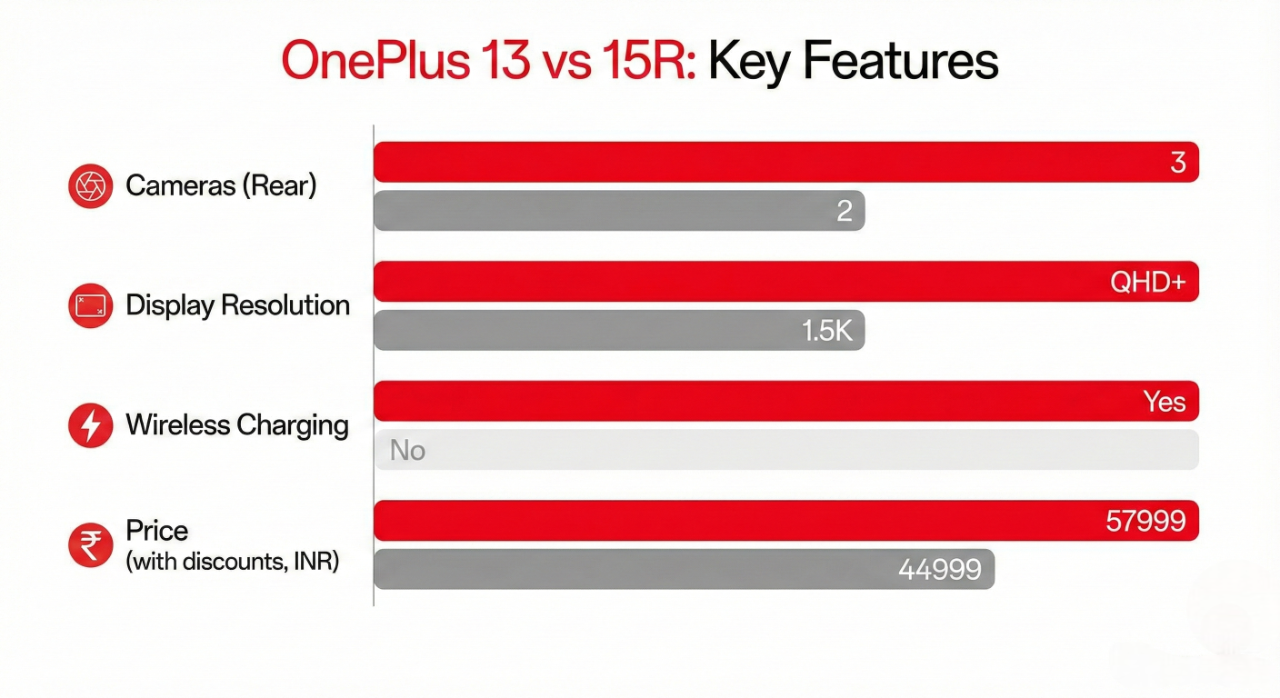
OnePlus 15R: ₹47,999 for 12GB/256GB according to Cashify's listing. With bank discounts, it drops to ₹44,999.
OnePlus 13: Originally ₹69,999, but News9Live confirms the Freedom Sale brings it to ₹57,999 effective price. 91mobiles spotted it at ₹61,999 on Flipkart even outside sales.
That's a ₹10,000-13,000 gap. But consider what you're getting:
- Better camera system with telephoto
- Higher resolution QHD+ display
- Wireless charging support
- Hasselblad colour science
- Alert Slider
- Premium design
The OnePlus 13 costs more, yes. But it delivers more.
Who Should Actually Buy The 15R?
The OnePlus 15R isn't terrible. It's just disappointing.
You should consider it if you're a mobile gaming enthusiast who prioritizes battery endurance above everything else, you never use optical zoom or take portrait photos, wireless charging isn't in your workflow, and you genuinely need that ₹10,000 saved.
For everyone else? The OnePlus 13 remains the more complete package.
The Verdict
OnePlus built the 15R for a market segment that doesn't really exist: gamers who want maximum battery but don't care about cameras or wireless charging, and are willing to pay more than the previous model offered for less overall capability.
The OnePlus 13 at current discounted prices represents better value for the average Indian smartphone buyer. It photographs better, displays sharper, charges more flexibly, and looks more distinctive.
Sometimes newer isn't better. This is one of those times.