![India AI Impact Summit 2026: Access 38,000 GPUs at Rs 67/Hour [Guide]](https://techdodo.in/storage/articles/india-ai-impact-summit-2026-gpu-access-guide_1768561770_696a1c6a5174a_medium.webp)
Quick Answer: IndiaAI Mission offers 38,000 GPUs at Rs 65-92 per hour to Indian startups and researchers - about one-third of global cloud prices. Best for bootstrapped AI teams building foundation models. The catch: approval process required through IndiaAI portal.
While US Startups Burn Cash, India Just Changed the Game
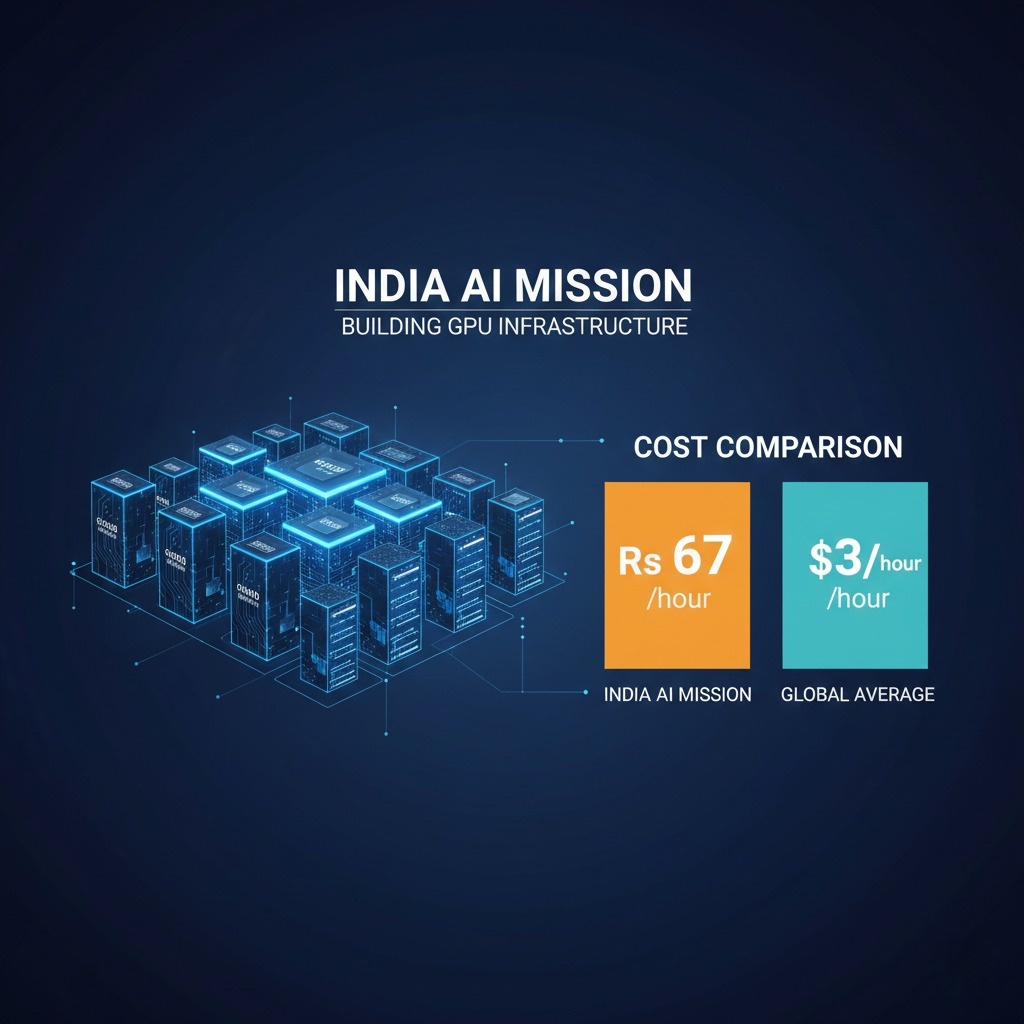
Here's a number that should make every Silicon Valley VC wince: Rs 67 per GPU hour.
That's what IT Minister Ashwini Vaishnaw announced as India's compute pricing. Meanwhile, startups in San Francisco are bleeding $2-4 per GPU hour on AWS and Azure. Do the math. That's a 70% cost advantage for training the exact same models.
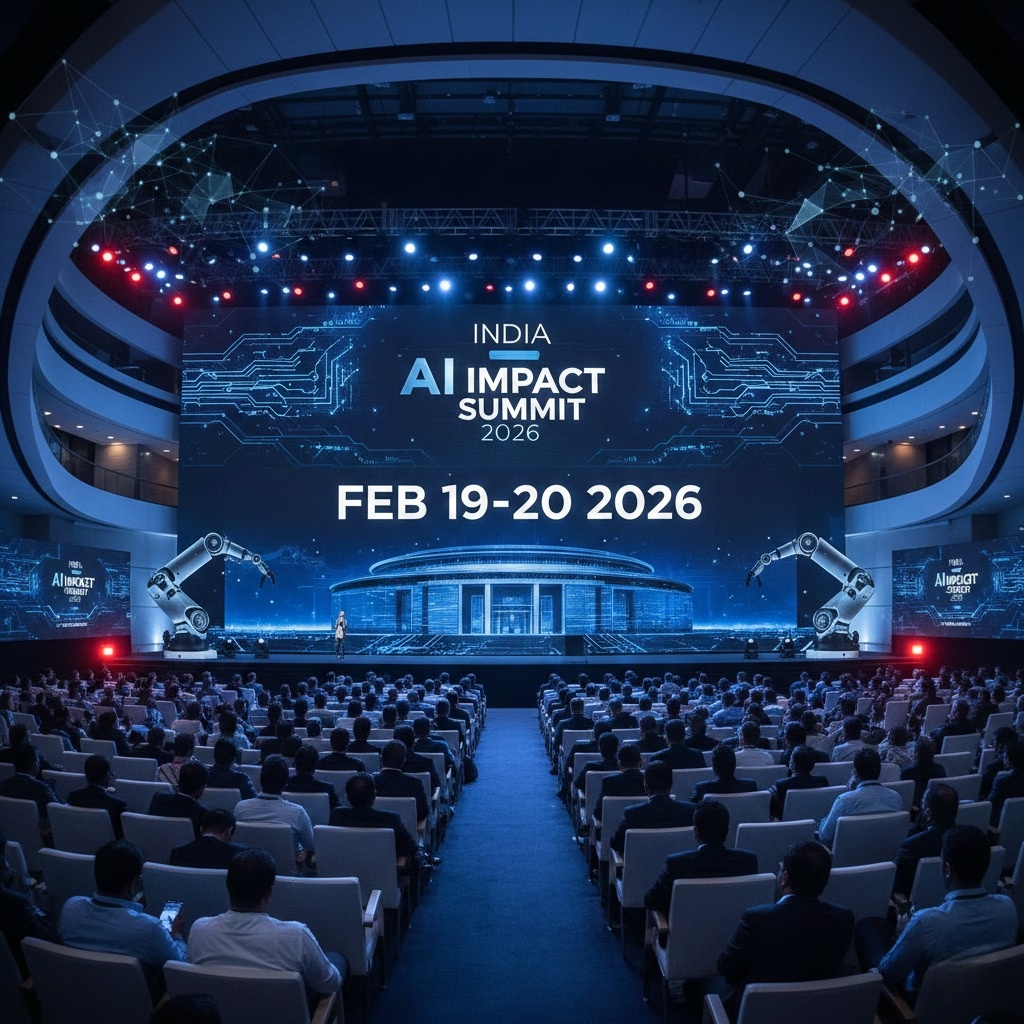
The India AI Impact Summit 2026, scheduled for February 19-20 in New Delhi, is where the government plans to flex this infrastructure muscle to the world. But here's what matters more than the summit itself: the compute is already live. You can apply today.
Let me break down exactly what's available and how to get it.
The Numbers That Actually Matter
According to PIB India, the IndiaAI Mission has onboarded over 38,000 GPUs. That's not a target. That's current capacity.
The breakdown, per official government announcements:
- 12,896 NVIDIA H100 GPUs - the same chips OpenAI uses
- 1,480 NVIDIA H200 GPUs - newer, faster
- Remaining units from AMD, Intel, and AWS chips
The pricing structure, according to Analytics India Magazine, quoting Minister Vaishnaw directly: "We provide the cheapest compute facilities in the world which is Rs 67/GPU hour."
For H100 GPUs specifically - the workhorses for training large language models - the rate is Rs 92 per hour. Still cheaper than what US startups pay for A100s.
Who Can Actually Access This?
This is where it gets interesting. According to the IndiaAI official portal, the eligible categories include:
- Academia and research institutions
- MSMEs and startups
- Government departments
- Public sector agencies
- Any entity registered and approved by IndiaAI
The approval part is key. You cannot just swipe a credit card and start training models. There's a registration process through the IndiaAI Compute Portal.
The good news? The government has empaneled 14 service providers already. The infrastructure exists. The bureaucracy is the only speed bump.
The Voucher Model: How the Subsidy Works
India did something clever here. Instead of directly subsidizing GPU purchases (which creates market distortions), they introduced a voucher-based model.
According to AI Spectrum India, here's how it works:
- The government guarantees a fixed price for GPU services from empaneled providers
- Eligible users get up to 40% reduced cost under the IndiaAI Mission
- High-end computing drops to under Rs 100 per hour with full subsidy applied
This means a startup training a model that would cost Rs 1,00,000 on commercial cloud could potentially do it for Rs 60,000 through IndiaAI.
AIKosh: The Dataset Goldmine Nobody's Talking About
GPUs are useless without data. This is where AIKosh enters.
Launched in March 2025 by MeitY, AIKosh is India's AI datasets platform. According to the official IndiaAI portal, it now hosts:
- 5,500+ datasets across 20 sectors
- 251 AI models including voice and Text-to-Speech tools
- Pre-trained models for Indian languages via BHASHINI integration
The kicker? According to government clarifications reported by PIB, there are no plans to monetize this data. It's free.
For startups building India-focused AI products, this eliminates one of the biggest early-stage costs: data acquisition and labeling.
BHASHINI: The Indian Language Advantage
If you're building AI for Indian users, BHASHINI changes everything.
The platform, developed under the National Language Translation Mission, now supports all 22 scheduled Indian languages plus several tribal languages. According to DD News, it offers over 300 pre-trained AI models exposed via open APIs.
The BHASHINI Samudaye workshop held on January 13, 2026, according to APAC News Network, focused on strengthening this ecosystem further. Companies like Sarvam AI and Ola Krutrim have already uploaded their models to AIKosh.
This means: you can build a Hindi voice assistant or a Tamil translation tool without training language models from scratch.
The Summit Itself: What's Actually Happening Feb 19-20
The India AI Impact Summit 2026 at Bharat Mandapam isn't just a conference. According to PIB India, it's structured around seven thematic "Chakras":
- Human Capital
- Inclusion
- Safe & Trusted AI
- Resilience
- Science
- Democratizing AI Resources
- Social Good
The accompanying AI Impact Expo (February 16-20) will feature 300+ exhibitors from 30+ countries.
Three global challenges - YUVAi, AI by HER, and AI for All - have already attracted over 15,000 registrations from 135 countries, according to official summit announcements.
How to Actually Apply: Step by Step
Based on information from the IndiaAI Compute Portal:
Step 1: Visit indiaai.gov.in and navigate to the Compute Capacity section
Step 2: Register your organization (startup, academic institution, or research body)
Step 3: Submit a proposal outlining your compute requirements and use case
Step 4: Wait for IndiaAI approval (timeline varies)
Step 5: Access GPUs through one of the 14 empaneled service providers
According to PIB, IndiaAI received over 500 proposals in initial phases. Twelve startups were selected in the first two rounds, including Sarvam AI, Gnani AI, and an IIT Bombay consortium called BharatGen.
The Catch (Because There's Always One)
Let me be straight with you.
This is government infrastructure. Approval processes exist. The subsidized rates require registration and validation. You cannot just spin up instances like you would on AWS.
For time-sensitive projects with investor deadlines, the onboarding friction might be a dealbreaker.
But for:
- PhD researchers building thesis projects
- Bootstrapped startups without VC backing
- Teams building India-specific language models
- Nonprofits working on social impact AI
This is genuinely game-changing. A 70% cost reduction on compute is the difference between "we can afford to try this" and "we cannot compete."
What This Means for Indian AI
India is betting big. The INR 10,300 crore IndiaAI Mission isn't just about hosting a fancy summit. It's about building sovereign AI infrastructure that doesn't depend on American cloud providers.
The 38,000 GPUs, the AIKosh datasets, the BHASHINI language models - these are building blocks for an AI ecosystem that could rival anything coming out of the Bay Area.
Will it work? Too early to say. But the infrastructure is real, the pricing is aggressive, and the access is opening up.
If you're an Indian startup founder or researcher reading this, there's no excuse not to apply. The worst they can say is no. And at Rs 67 per GPU hour, the upside is too significant to ignore.