![GPT Image 1.5 vs Nano Banana Pro: Speed or Realism? [Test Results]](https://techdodo.in/storage/articles/gpt-image-1-5-vs-nano-banana-pro-comparison_1765984063_6942c73f4124e_original.webp)
OpenAI Fires Back at Google's Viral Image Generator
On December 16, 2025 IST, OpenAI dropped GPT Image 1.5—its direct answer to Google's Nano Banana Pro, the image model that had been absolutely dominating social media feeds since November. The timing wasn't coincidental. According to TechCrunch, OpenAI CEO Sam Altman had internally declared a "code red" after Google's Gemini 3 and Nano Banana Pro topped LMArena leaderboards and attracted millions of users away from ChatGPT.
The new model promises 4x faster generation, 20% cheaper API pricing, and what OpenAI calls "production-ready" image editing. But here's where it gets interesting: while GPT Image 1.5 has already claimed the #1 spot on LMArena for text-to-image generation with a score of 1264 (a commanding 29-point lead), the conversation on Reddit and among content creators tells a different story.
So which model actually delivers? After digging through benchmark data, user reviews, and real-world tests, the answer isn't as simple as either company would like you to believe.
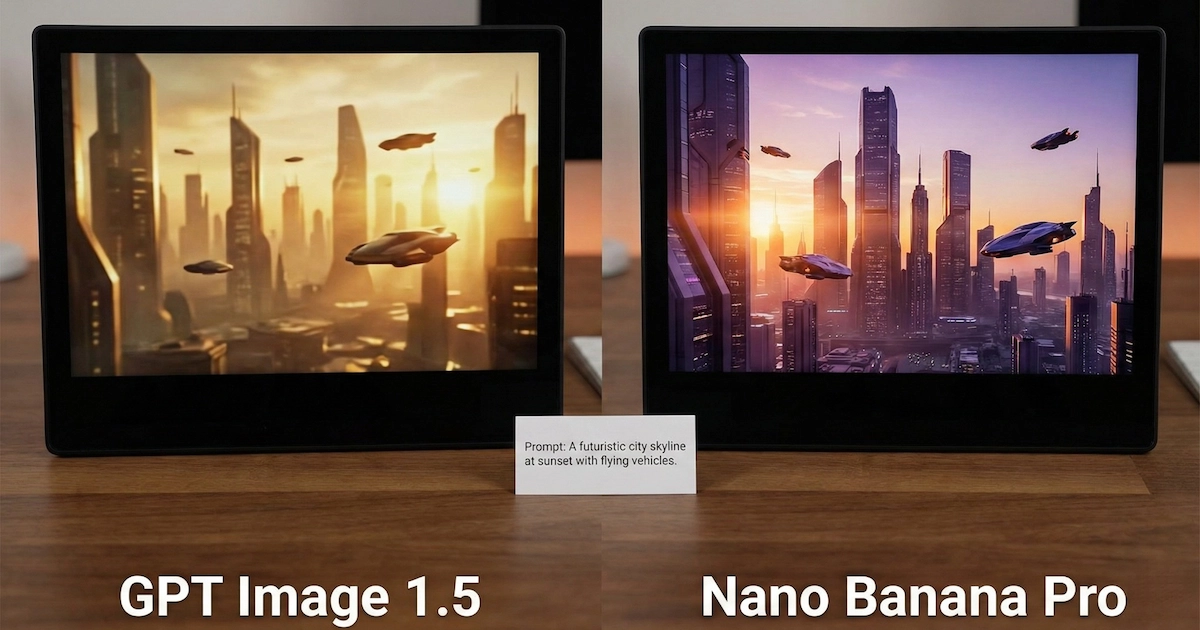
What Each Model Actually Does
GPT Image 1.5 powers the new ChatGPT Images experience rolling out to all users globally. OpenAI has positioned it as a "creative studio in your pocket"—capable of generating images from scratch, making precise edits to uploaded photos, and maintaining consistency in lighting, composition, and facial likeness across multiple iterations. The dedicated Images tab in ChatGPT's sidebar now offers preset filters and trending prompts, a clear signal that OpenAI wants viral content creation happening on its turf.
Nano Banana Pro (officially Gemini 3 Pro Image), released November 20, 2025, builds on Google DeepMind's foundation with Gemini 3 Pro's reasoning capabilities. The codename "Nano Banana" originated from internal placeholder naming during secret testing on LMArena and stuck after the community latched onto it. The model emphasizes studio-quality output with up to 4K resolution, support for blending up to 14 reference images simultaneously, and what Google calls "world knowledge"—the ability to pull accurate real-world context into generated images.
The Benchmark Battle
According to LMArena's blind testing methodology (where users compare outputs without knowing which model produced them), GPT Image 1.5 has taken the crown:
Category | GPT Image 1.5 | Nano Banana Pro |
Text-to-Image Score | 1264 (Rank #1) | 1235 |
Image Editing Score | 1395 (Rank #4) | 1392 |
ChatGPT Image Latest (Editing) | 1409 (Rank #1) | — |
The numbers look decisive. But LMArena notes these scores remain "preliminary"—rankings can shift as more users participate. And independent testing from The Decoder found that GPT Image 1.5 "performs on par with Google's Nano Banana Pro" on complex prompts requiring unusual scene compositions, not dramatically ahead.
Microsoft's internal testing on their Foundry platform found GPT Image 1.5 "performs higher than other image generation models in prompt alignment and infographics tasks"—specific use cases, not a blanket superiority claim.
What Reddit Actually Thinks
Here's where press releases diverge from reality. According to a detailed analysis aggregating Reddit discussions across r/ChatGPT, r/OpenAI, and r/Singularity, the community sentiment is "mixed but realistic."
The consistent themes emerging from user feedback:
On GPT Image 1.5:
- "Feels like OpenAI catching up, not overtaking Google yet"
- Praised for handling "unusual tasks, like generating textures or abstract visual assets"
- Speed improvements genuinely appreciated for iteration-heavy workflows
- Text rendering noticeably better than previous versions
On Nano Banana Pro:
- "More praise on Reddit, especially for realism"
- Trusted more "for serious visual work"
- Better at natural lighting and "that smartphone photo look"
- Superior human portrait rendering
One widely-shared observation from the Pablo Blog's direct comparison put it bluntly: Nano Banana Pro "went beyond simply executing the prompt—it added authentic contextual details" in their Amsterdam terrace test, producing output that "could pass as a genuine smartphone photo." GPT Image 1.5's result had "that telltale AI-generated look."
The Real Differences That Matter
After synthesizing multiple independent tests, certain patterns become clear:
GPT Image 1.5 wins at:
- Speed: Up to 4x faster generation, crucial for rapid iteration
- Instruction following: Better at complex, multi-part prompts
- Text rendering: Handles denser, smaller text more accurately
- Character consistency: Maintains facial likeness across multiple edits
- Cost: 20% cheaper than GPT Image 1 for API users ($8 per million input tokens, $32 per million output)
Nano Banana Pro wins at:
- Photorealism: More natural-looking results, especially portraits
- Resolution: Up to 4K output vs GPT Image 1.5's unspecified max
- World knowledge: Leverages Google Search for context-accurate details
- Multi-image blending: Supports up to 14 reference images simultaneously
- Professional controls: Camera angles, depth of field, scene lighting adjustments
- Transparency: SynthID watermarking built into all outputs
BestPhoto AI's technical analysis summarized it well: "Use GPT Image 1.5 when you need text in images, fast iteration, or complex multi-element edits. Use Nano Banana Pro when photorealism and natural lighting are your top priorities."
The Pricing Reality
For individual users, both models are accessible through their respective platforms (ChatGPT and Gemini app). The difference shows up for developers and enterprise users:
GPT Image 1.5 API:
- $8 per million input image tokens
- $2 per million cached input tokens
- $32 per million output image tokens
- Available globally through OpenAI API
Nano Banana Pro:
- Available through Gemini API, Google AI Studio, and Vertex AI
- Google hasn't disclosed equivalent per-token pricing publicly
- Previous Nano Banana model cost $0.039 per 1024px image
- Google notes Nano Banana Pro is "slower and costlier" than the original
For ChatGPT and Gemini app users, the free tiers on both platforms offer limited generations before requiring subscription upgrades. Neither company has disclosed exact generation limits.
What Content Creators Are Saying
YouTube tech creators and AI reviewers have been putting both models through their paces since Nano Banana Pro's November launch. The emerging consensus aligns with Reddit sentiment:
For marketing materials and e-commerce: GPT Image 1.5's improved brand logo preservation and faster iteration make it practical for producing product catalogs and promotional assets.
For social media content and viral trends: Nano Banana Pro's photorealism and the Gemini app's integration with X (where users can tag the model directly in posts) have given it a significant advantage in generating shareable content.
For professional creative work: Both models have legitimate use cases, and some creators report using both—GPT Image 1.5 for initial ideation and iteration, Nano Banana Pro for final polished output.
The Smol AI newsletter's assessment captured a nuanced point: GPT Image 1.5 "claims top performance across all industry arenas" but "failed so-called 'Vibe Checks'"—a gap between benchmark supremacy and the subjective quality that makes images feel right.
What's Missing From Both
Neither model has solved the fundamental challenges of AI image generation:
GPT Image 1.5 hasn't publicly detailed its watermarking approach—a significant gap compared to Google's transparent SynthID implementation. OpenAI also hasn't addressed the ethical concerns around training data that continue to generate controversy in the creative community.
Nano Banana Pro still struggles with "small faces, accurate spelling, and fine details" according to Google's own documentation. Its real-world knowledge, while impressive, "may misinterpret information or produce factually incorrect results" in data-driven visuals.
Both models share the industry-wide problem of potentially displacing human artists—a concern that neither company's marketing materials adequately address.
The Verdict (That Isn't Really a Verdict)
OpenAI released GPT Image 1.5 ahead of its planned January schedule specifically because Google was winning. That tells you everything about where the competition stands. The benchmark lead is real, but the community preference for Nano Banana Pro's output quality is equally real.
If you're choosing between them:
Pick GPT Image 1.5 for speed, iteration, text-heavy visuals, and if you're already embedded in the ChatGPT ecosystem.
Pick Nano Banana Pro for photorealism, portrait quality, and professional-grade output where "looking real" matters more than speed.
Or do what many professionals are doing: use both. The AI image generation landscape moves too fast to commit to a single tool, and the best results often come from knowing which model to reach for in each specific situation.
Both OpenAI and Google will ship updates within months that reshuffle these rankings. We'll update this comparison when that happens.