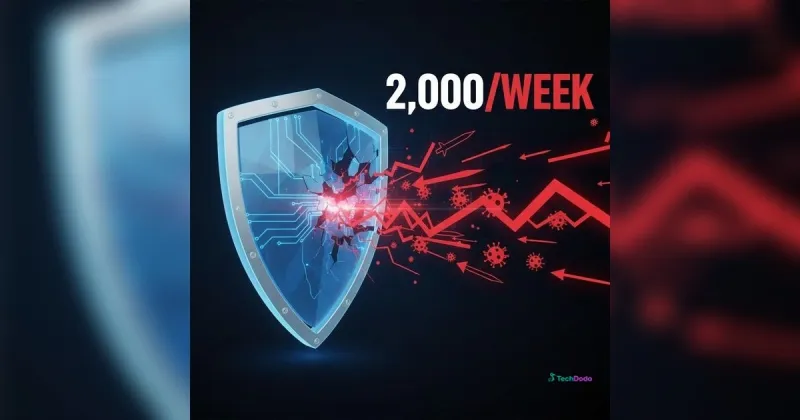
Quick Answer: Indian organizations face 2,000+ cyberattacks weekly—96% above the global average. Trojans and file infectors cause 70% of breaches. Best for enterprises reassessing security posture. The catch: most attacks exploit cloud misconfigurations, not sophisticated zero-days.
Cyber Attacks India 2026: Why Your Company Gets Hit 2,000 Times a Week
Stop scrolling through your quarterly security report. Put down the green checkmarks. Here's a number that should make your CISO sweat: 2,011.
That's how many cyberattacks the average Indian organization faces every single week, according to Check Point's State of Cyber Security in India 2025 report. While global companies deal with roughly 1,657 attacks weekly, Indian enterprises get hammered with 96% more. And most of them don't even know it.
Welcome to 2026—the year cybersecurity stopped being an IT problem and became an existential business threat.
The Numbers That Should Terrify You
Let's talk raw data, because the scale is genuinely absurd.
Seqrite Labs, India's largest malware analysis centre, monitored over 8 million endpoints between October 2024 and September 2025. What they found was staggering: 265.52 million detections. That translates to 727,000 threats detected daily, or about 505 every single minute.
Here's the breakdown that matters:
- 88.4 million Trojan detections
- 71.1 million File Infector detections
- 34 million unusual activities flagged by Next-Gen Antivirus
- 9.2 million network-based attack scans
- 6.5 million cryptojacking instances
Together, Trojans and File Infectors account for nearly 70% of all enterprise attacks. These aren't sophisticated zero-day exploits requiring nation-state resources. These are bread-and-butter malware strains that should have been blocked by basic hygiene. And yet here we are.
The Geography of Vulnerability
If you're running a business in Maharashtra, congratulations—you're operating in India's cyber attack capital.
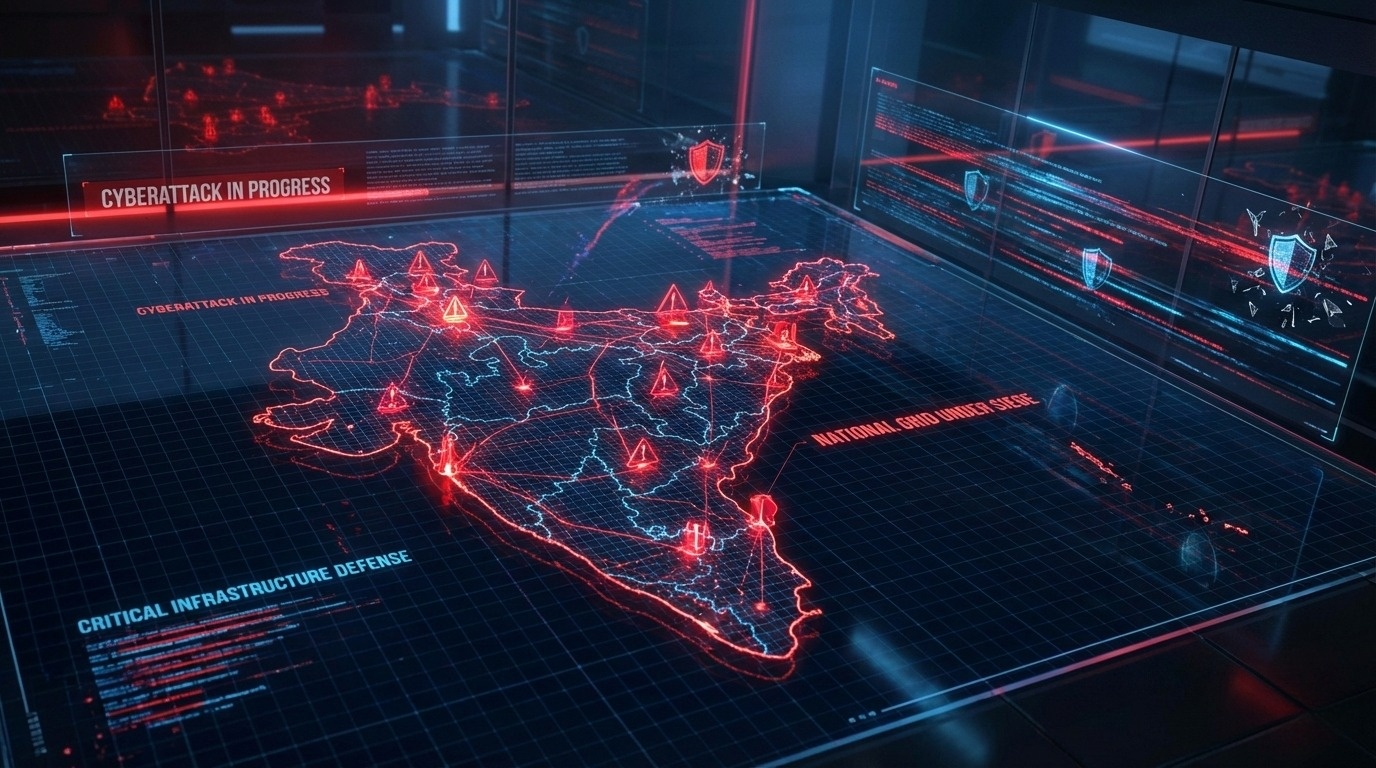
According to the India Cyber Threat Report 2026, Maharashtra recorded 36.1 million detections, followed by Gujarat (24.1 million) and Delhi (15.4 million). Mumbai, Kolkata, and New Delhi emerge as the most targeted cities. The pattern is predictable: where the money flows, the attackers follow.
But here's the twist nobody talks about. Education, Healthcare, and Manufacturing—not BFSI—account for nearly 47% of all detections. Indian educational institutions faced between 4,248 and 9,817 attacks per week in certain periods, far exceeding other industries. Why? Because these sectors digitized rapidly during COVID but never invested proportionally in security. The attackers noticed.
Operation Sindoor: When Cyber Warfare Became Real
April 2025 changed everything.
Following the Pahalgam terrorist attack on April 22, 2025, India witnessed what Maharashtra Cyber called "the first instance of cyberspace becoming an active, coordinated theatre of conflict during an India-Pakistan crisis."
The numbers are sobering. According to a Maharashtra Cyber report, over 1.5 million cyberattacks were launched during this period, with 150 successfully breaching Indian digital infrastructure. Seqrite documented over 650 cyber incidents targeting defence, telecom, municipal corporations, and hospitals.
The orchestrator? APT36, also known as Transparent Tribe—a Pakistan-aligned Advanced Persistent Threat group that's been on security researchers' radar for years. But this time, they evolved.
Gone were the older Poseidon loaders. APT36 deployed Ares—a modular, evasive malware framework—distributed through weaponized files masquerading as official government advisories. Names like "Final_List_of_OGWs.xlam" and "Preventive_Measures_Sindoor.ppam" exploited public anxiety about national security.
APT36 didn't work alone. Over 35 hacktivist collectives coordinated via Telegram under hashtags like #OpIndia and #OperationSindoor, launching DDoS attacks, defacements, and data leaks. The targets included MoD, Army, Navy, DRDO, NIC, GSTN, AIIMS, Jio, and BSNL.
This wasn't just hacking. This was hybrid warfare.
The INR 36,450 Crore Elephant
Let's talk money, because that's ultimately what this is about.
Data from the National Cyber Crime Reporting Portal shows cyber fraud losses touched INR 36,450 crore as of February 2025. The drivers are familiar: phishing-led UPI fraud, AI-assisted social engineering, SIM swap attacks, and deepfake-enabled scams.
The average cost of a data breach in India now exceeds INR 200 crore, factoring in remediation, downtime, legal costs, and reputational damage.
Cybersecurity incidents themselves rose from 10.29 lakh in 2022 to 22.68 lakh in 2024—more than doubling in just two years. Early 2025 indicators suggest the growth continues unabated.
2026: The Year AI Attacks Get Real
If the numbers above weren't concerning enough, consider what's coming.
Cloudflare's Chief Security Officer Grant Bourzikas believes 2026 will be "the year of real AI attacks." The past year saw AI contribute to basic malicious activities—social engineering, deepfakes, business email compromise. But 2026 marks the shift to autonomous, AI-driven attack campaigns.
Enter "vibe coding"—or as threat actors call it, "vibe hacking."
The concept is simple and terrifying. Just as legitimate developers now use AI to generate code from natural language prompts, attackers are using the same tools to create malware without deep technical expertise. According to Palo Alto Networks' Unit 42, "Everybody's asking: Is vibe coding used in malware? And the answer, right now, is very likely yes."
VIPRE's 2026 threat forecast predicts AI-native malware ecosystems—malware that continually rewrites its own code and adapts in real-time as it encounters security controls. Attackers will use LLM engines to assemble automated exploit kits that scan for unpatched vulnerabilities, construct tailored payloads, and execute attacks without direct human oversight.
The democratization of cybercrime is complete. You no longer need to be a hacker to hack.
The Threats Nobody's Talking About
Supply Chain Attacks
The Digital Terminal report on 2026 enterprise threats highlights supply chain attacks as a critical concern. Cybercriminals compromise a trusted software vendor or service provider to infiltrate multiple downstream organisations. Even entities with robust internal security get hit through third-party dependencies. Your security is only as strong as your weakest vendor.
Cloud Misconfigurations
As Indian organisations migrate to cloud infrastructure, weak identity controls, exposed storage, and improper access management allow attackers to bypass traditional network defences. Check Point's report specifically calls out cloud misconfigurations as a major attack vector.
Quantum-Era "Harvest Now, Decrypt Later"
Here's a threat most Indian enterprises haven't even considered. Adversaries are downloading encrypted data today, storing it, and waiting for quantum computers powerful enough to break current encryption. According to Federal Reserve research on post-quantum cryptography, one in three cybersecurity experts forecast that "Q-Day"—when quantum computers can routinely break existing encryption—will happen before 2032.
Your encrypted data from today could be readable text in seven years.
What Actually Works
India's overall cybersecurity preparedness scores 6.37 out of 10 according to Seqrite's Cybersecurity Preparedness Survey. Adoption rates are strong in advanced malware protection (86.7%) and backup readiness (78.5%), but significant gaps persist in incident response, secure configuration, and asset hygiene.
Here's what enterprises should actually focus on:
- Assume breach mentality: You're already compromised. Build detection and response capabilities, not just prevention.
- Supply chain audits: Map your third-party dependencies. Demand security attestations from vendors.
- Cloud security posture management: Automated scanning for misconfigurations before attackers find them.
- Employee training on AI-generated threats: Phishing emails are getting frighteningly good. Traditional "spot the typo" training is obsolete.
- Post-quantum planning: Start inventorying sensitive data that needs long-term protection and plan for cryptographic migration.
Seqrite's newly launched Ransomware Recovery as a Service (RRaaS) represents the kind of structured, expert-led response that transforms ransomware recovery from crisis management into managed operations with zero ransom dependency.
The Uncomfortable Truth
You're reading this article, which means you care about cybersecurity. But caring isn't enough.
The data is unambiguous: Indian enterprises face nearly twice the global attack volume, state-sponsored threat actors are actively targeting critical infrastructure, AI is lowering the barrier to entry for cybercrime, and most organisations still operate with a 6.37/10 security posture.
The attackers are evolving. The question is whether Indian enterprises will evolve faster.
We'll update this article as CERT-In releases additional guidance and as Q1 2026 threat data becomes available.