ChatGPT Just Got Its Own App Store. Here's Why That's a Bigger Deal Than It Sounds.
On December 17, 2025, OpenAI officially stopped pretending ChatGPT is just a chatbot.
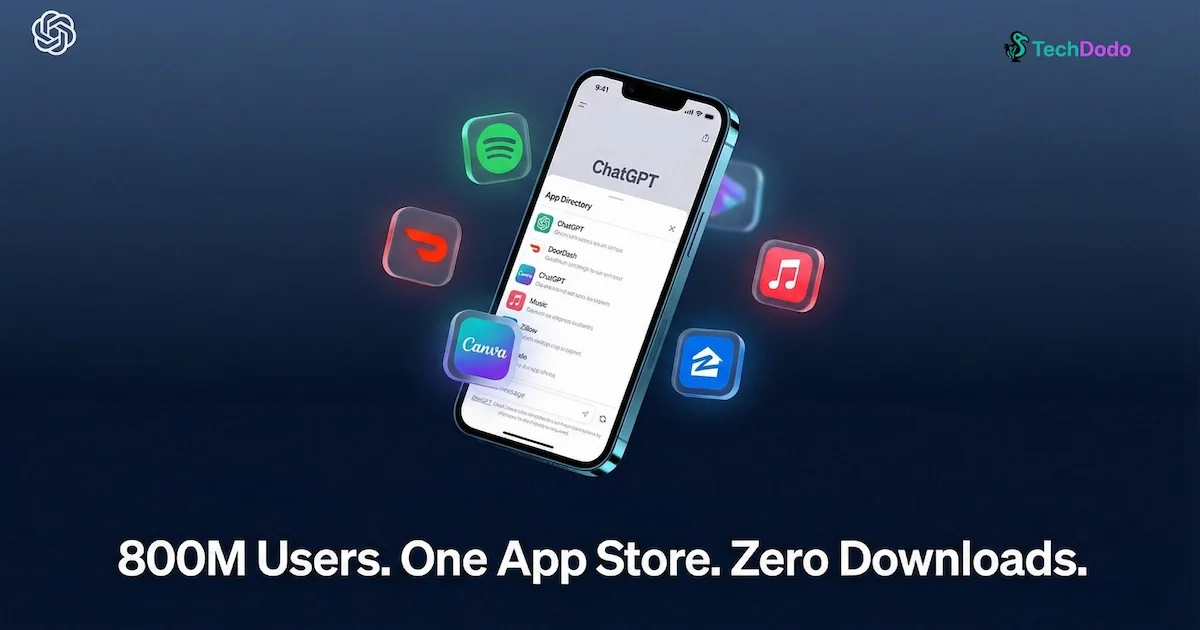
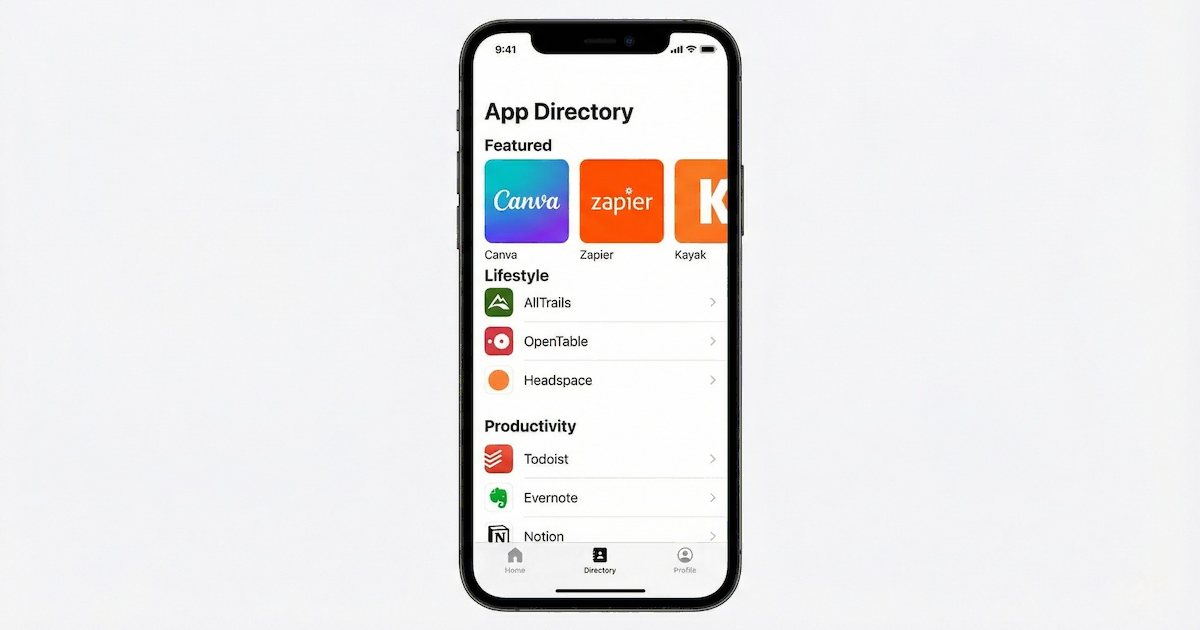
The company rolled out the ChatGPT App Directory—an in-chat marketplace where users can browse, connect, and use third-party apps without ever leaving the conversation. Think Apple's App Store, but instead of downloading software, you just talk to it.
Available on web, iOS, and Android, the directory already features integrations with Spotify, Apple Music, DoorDash, Canva, Zillow, Adobe Photoshop, Dropbox, Booking.com, Figma, Expedia, and Coursera. Users can create playlists, order groceries, search for apartments, or design presentations—all through natural language prompts.
And here's where it gets interesting: OpenAI has opened app submissions to all developers. If you can build it, you can potentially put it in front of 800 million weekly active users.
How the ChatGPT App Store Actually Works
The mechanics are surprisingly intuitive. Type a message that starts with an app's name—"Spotify, make a workout playlist with high BPM tracks"—and ChatGPT automatically surfaces the integration. First-time users get prompted to authorize the connection, similar to OAuth flows you've seen a thousand times.
Once connected, apps respond to natural language and render interactive elements directly in the chat window. Zillow shows apartment listings on embedded maps. Canva generates slide decks from your text outline. Spotify compiles playlists based on mood descriptions.
The key distinction from OpenAI's failed GPT Store (launched January 2024, largely forgotten by summer) is that these aren't custom prompts wrapped in a UI. They're full-stack applications running on OpenAI's Apps SDK, which extends the open-source Model Context Protocol (MCP) originally developed by competitor Anthropic.
Developers can trigger apps via:
- @mentions in conversation
- Slash commands (e.g., /Apple Music)
- Tools menu selection
- Automatic suggestion when ChatGPT detects relevant context
That last one is the strategic tell. OpenAI isn't just building a store—it's building intent-based routing. The AI decides when an app might be useful, not the user.
The Platform Play: What OpenAI Really Wants
"We're opening ChatGPT for developers to build real apps inside of ChatGPT," Sam Altman said at DevDay 2025. "This will enable a new generation of apps that are interactive, adaptive, and personalized—that you can chat with."
The subtext is less subtle: OpenAI wants ChatGPT to become the OS of the AI era.
Consider the numbers. ChatGPT now processes over 18 billion messages weekly—five times the volume from 2024. The platform has 800 million weekly active users, and OpenAI recently hit $10 billion in annual recurring revenue. That's not a product; that's infrastructure.
By embedding apps directly into conversations, OpenAI achieves several strategic goals simultaneously:
- Increased session time: Users don't leave ChatGPT to complete tasks
- Developer lock-in: Building chat-native apps means rebuilding from scratch for other platforms
- Data consolidation: Every app interaction feeds OpenAI's understanding of user intent
- Revenue diversification: The upcoming Agentic Commerce Protocol opens in-chat transactions
The comparison to Apple's 2008 App Store launch isn't accidental. OpenAI executives have explicitly referenced the iPhone moment—the shift from single-purpose device to platform ecosystem.
What's Available Right Now (And What's Not)
Launch Partners (Live as of December 19, 2025 IST)
Category | Apps |
Productivity | Canva, Figma, Dropbox, Adobe Photoshop, Airtable, Salesforce |
Travel | Booking.com, Expedia |
Real Estate | Zillow |
Music | Spotify, Apple Music |
Food Delivery | DoorDash |
Education | Coursera |
Outdoor | AllTrails |
Coming Soon (Confirmed)
- Uber (ride-hailing)
- Target (retail)
- OpenTable (restaurant reservations)
- Instacart (grocery delivery)
- TripAdvisor (travel reviews)
- Khan Academy (education)
- Peloton (fitness)
- Thumbtack (local services)
Regional Availability
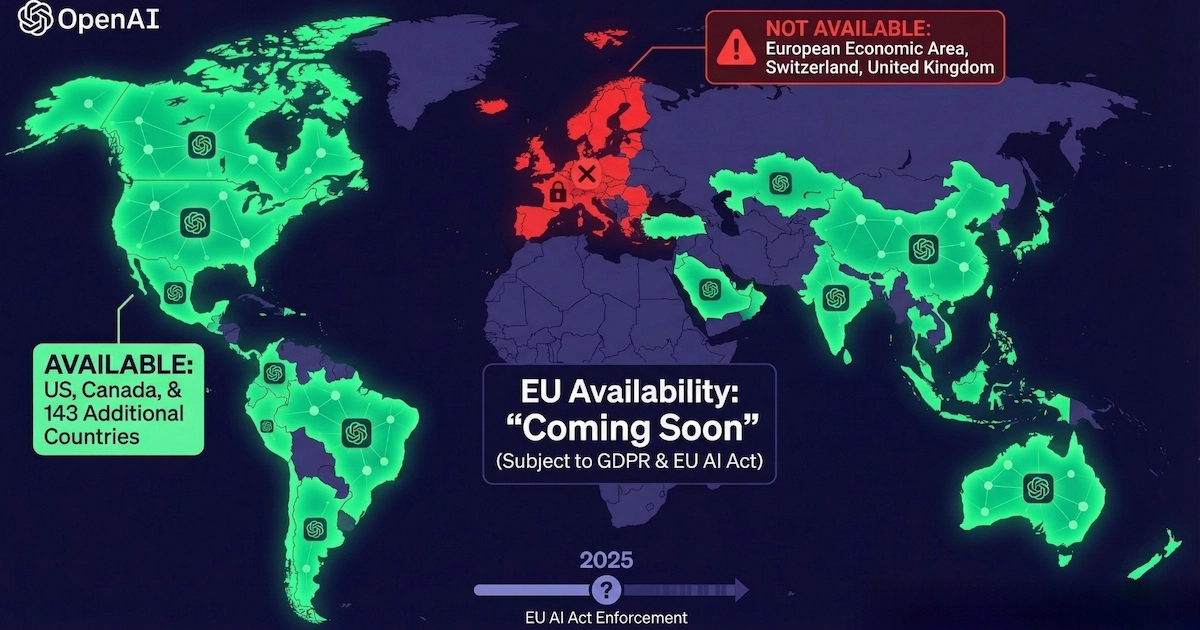
Available: US, Canada, and 143 additional countries Not Available: European Economic Area, Switzerland, United Kingdom
OpenAI says EU availability is "coming soon" but hasn't committed to a timeline. Given GDPR complexities and the EU AI Act enforcement beginning in 2025, "soon" may be optimistic.
For Developers: How to Build and Submit Apps
OpenAI's Apps SDK is currently in beta, with full documentation available at developers.openai.com/apps-sdk. The framework builds on Model Context Protocol, meaning your MCP server exposes tools that ChatGPT can invoke during conversations.
Technical Requirements
- MCP Server: Must implement tool listing, tool calling, and component returns
- Authentication: OAuth 2.1 with PKCE required for user data access
- Transport: Streamable HTTP recommended (SSE also supported)
- UI Components: Interactive widgets render via embedded HTML resources
Submission Process
- Build and test using Developer Mode in ChatGPT
- Submit through the OpenAI Developer Platform
- Provide MCP connectivity, metadata, and country settings
- Wait for quality and safety review
- Approved apps appear in the App Directory
OpenAI states that first approved third-party submissions will begin rolling out in early 2026. Apps meeting higher design and functionality standards may be featured more prominently or recommended automatically during conversations.
Critical note: Only one version of an app can be under review at a time. OpenAI provides a step-by-step quickstart guide, open-source example apps, and a UI library for chat-native interfaces.
The Monetization Question Mark
Here's where the pitch gets shakier.
As of December 2025, developers can only monetize by linking out to their own websites or native apps for transactions. Digital goods, subscriptions, and in-app purchases are explicitly prohibited within ChatGPT.
OpenAI's official position: "We're exploring additional monetization options over time, including digital goods."
That's corporate speak for "we haven't figured it out yet."
The Agentic Commerce Protocol—co-developed with Stripe—enables Instant Checkout for physical goods from select merchants (currently US Etsy sellers, with Shopify merchants like Glossier and SKIMS coming soon). Merchants pay a small fee on completed purchases, but the service is free for users.
PayPal announced in October 2025 that it's adopting the protocol, potentially connecting tens of millions of merchants to ChatGPT commerce in 2026.
But for most developers building productivity, utility, or entertainment apps? Revenue remains a question mark.
What Experts Disagree On
Discovery Mechanics
Some analysts see intent-based app surfacing as revolutionary—the end of keyword-based search. Others warn it creates a new gatekeeping layer where OpenAI's algorithms determine which apps users see.
Competition Response
Google is reportedly developing an Engage SDK for Android with similar contextual surfacing. Whether traditional app stores can adapt or will be disrupted remains contested.
Developer Viability
Veteran app developers point to the GPT Store's failure as a cautionary tale. Despite initial hype in 2024, revenue sharing never materialized at scale. The Apps SDK is technically more sophisticated, but the economic model is unproven.
The Risks Nobody's Talking About
Data Privacy Concerns Connecting apps requires authorization that shares conversation data with third-party developers. OpenAI requires "clear privacy policies" and "minimum data collection," but enforcement mechanisms remain unclear. If you enable Apple Music integration, your chat history becomes training context for playlist generation.
Regulatory Exposure The EU's Digital Markets Act may classify ChatGPT as a gatekeeper platform if app distribution reaches critical mass. That triggers interoperability requirements and third-party access mandates that could complicate OpenAI's business model.
Platform Dependency Developers building chat-native apps are betting on OpenAI's long-term dominance. If Gemini, Claude, or a future competitor captures market share, apps built exclusively for ChatGPT may require complete rebuilds.
Monetization Uncertainty OpenAI has approximately $5 billion in annual infrastructure costs. The company is "exploring" revenue options for developers, but exploration doesn't pay salaries. Building a business on this platform today requires faith in future commitments.
The Bottom Line
OpenAI has spent three years teaching 800 million people to talk to a computer. Now it wants them to shop, work, travel, and entertain themselves without ever leaving the conversation.
The ChatGPT App Directory isn't just a product launch—it's a platform declaration. By embedding third-party apps directly into conversational AI, OpenAI positions itself as the distribution layer between users and digital services.
For developers, it's a massive opportunity with undefined economics. For users, it's a genuinely useful feature that reduces friction between intent and action. For Apple and Google, it's a warning shot that the next app ecosystem might not need their approval at all.
The apps are rolling out gradually. The developer submissions are open. The monetization model is "coming."
We'll update this article as OpenAI confirms EU availability timelines, developer revenue mechanisms, and additional launch partners.