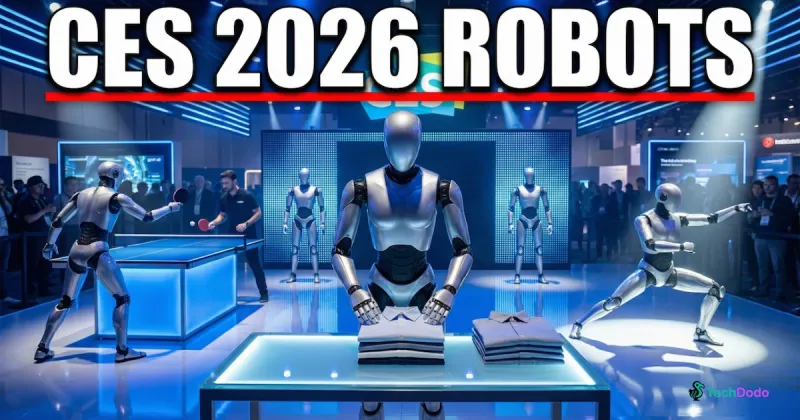
Quick Answer: CES 2026 delivered real humanoid robots with actual price tags—from ₹21 lakh to under ₹8.5 lakh. Best for tech enthusiasts tracking automation trends. The catch: Most ship late 2026 at the earliest.
The Robots Have Arrived. No, Really This Time.
Stop scrolling. If you've been dismissing robot announcements as "cool demos that'll never ship," CES 2026 just made you wrong.
For years, humanoid robots at tech shows followed a predictable script: flashy demo, vague timeline, zero pricing, and then... silence. You'd see them backflip on stage and then vanish into R&D limbo. CES 2026 broke that pattern entirely.
This year, companies showed up with production models, published price lists, and named actual customers. Boston Dynamics is shipping Atlas to Hyundai factories. A Chinese startup quoted ₹21 lakh for a humanoid that can throw punches. And SwitchBot—yes, the curtain-opener people—unveiled a robot that folds your laundry for under ₹8.5 lakh.
Here's the thing: we're not talking about "someday." We're talking about shipping timelines in months, not decades.
I've filtered through the noise to bring you five robots that actually matter—ones with real specs, confirmed prices, and delivery windows you can mark on your calendar. Whether you're a tech founder evaluating automation, an investor tracking the space, or just someone who genuinely hates folding clothes, this is the list that matters.
1. Boston Dynamics Atlas: The Industry Juggernaut Finally Goes Commercial
Remember when Boston Dynamics videos felt like science fiction? That era ended at CES 2026.
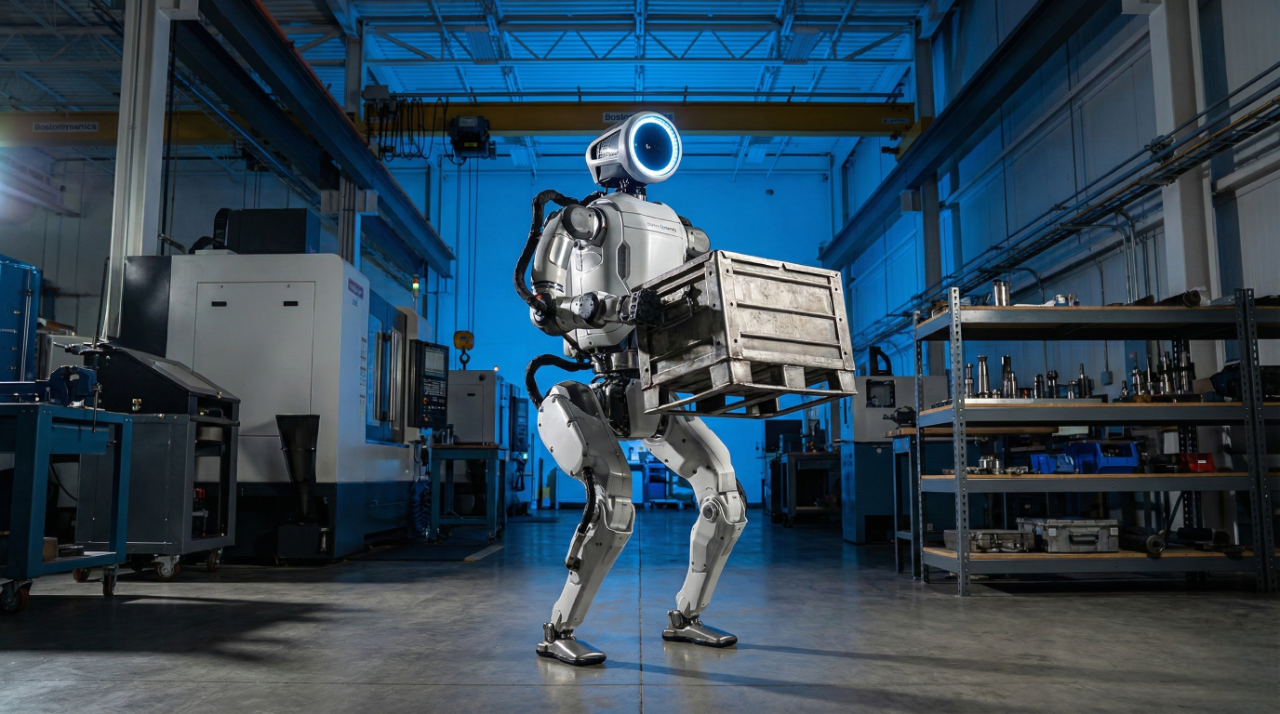
The company unveiled the production-ready version of its electric Atlas humanoid, and this isn't a prototype. It's going into manufacturing immediately, with all 2026 units already committed to Hyundai and Google DeepMind.
The Specs That Matter:
Specification | Details |
Degrees of Freedom | 56 |
Reach | 7.5 feet (2.3m) |
Lifting Capacity | 110 lbs (50 kg) |
Operating Temperature | -20°C to 40°C |
Battery Life | 4 hours continuous |
Hot-Swappable Batteries | Yes |
What makes Atlas different from every other humanoid demo you've seen? It's designed for the most boring thing imaginable: actually working. The robot features 360-degree vision for detecting humans in busy workplaces, automatically pausing when someone walks within its radius. It can autonomously swap its own batteries. And its joints rotate in ways that would snap a human spine—which is exactly the point in tight factory spaces.
Boston Dynamics also announced a partnership with Google DeepMind to integrate Gemini Robotics AI, enabling Atlas to reason through complex instructions rather than following pre-programmed routines. Hyundai plans to use Atlas for parts sequencing by 2028, eventually expanding to component assembly by 2030.
India Angle: No direct India availability announced, but Hyundai's global manufacturing network includes plants in Chennai. With Hyundai planning to deploy tens of thousands of Atlas units across facilities worldwide, Indian automotive manufacturing could see indirect exposure to this technology within the decade.
The Catch: Atlas isn't for consumers—it's enterprise-only, with pricing undisclosed but clearly in the "if you have to ask, you can't afford it" category. But the signal is clear: the industrial robot age isn't coming. It's here.
2. EngineAI T800: The ₹21 Lakh Terminator That's Actually Real
You've probably seen the viral videos—a humanoid robot throwing punches, doing martial arts moves so smoothly that half the internet called CGI. At CES 2026, Chinese company EngineAI proved the skeptics wrong by putting the T800 on stage and letting it demonstrate.
The Numbers:
Specification | Details |
Height | 1.73 metres |
Weight | 75 kg |
Peak Joint Torque | 450 Nm |
Peak Joint Power | 14,000 W |
AI Compute | 2000 TOPS (NVIDIA Jetson Thor) |
Perception | 360° LiDAR |
Starting Price | $25,000 (~₹21.2 lakh) |
Shipping | Mid-2026 |
Let's talk about that ₹21 lakh price tag. For context, comparable humanoid systems have historically cost north of ₹85 lakh. EngineAI is essentially offering industrial-grade humanoid capability at the cost of a luxury SUV.
The T800 is built on a magnesium-aluminium alloy frame with joint actuators capable of delivering torque that rivals professional athletes. In high-dynamic scenarios—martial arts demonstrations, running, heavy load handling—it delivers industry-leading output.
India Angle: At ₹21.2 lakh, the T800 enters territory where Indian manufacturing SMEs could theoretically evaluate ROI. For repetitive, physically demanding tasks that currently require multiple human shifts, the math could start making sense—especially for companies already automating with traditional industrial robots.
The Catch: "Shipping mid-2026" from a Chinese hardware startup is a bold promise. The transition from impressive CES demo to reliable factory-floor deployment has killed more robotics companies than any technical challenge. But EngineAI claims to have an automated manufacturing facility in Shenzhen ready for mass production.
3. Unitree G1: The ₹11.5 Lakh Robot That Box At CES
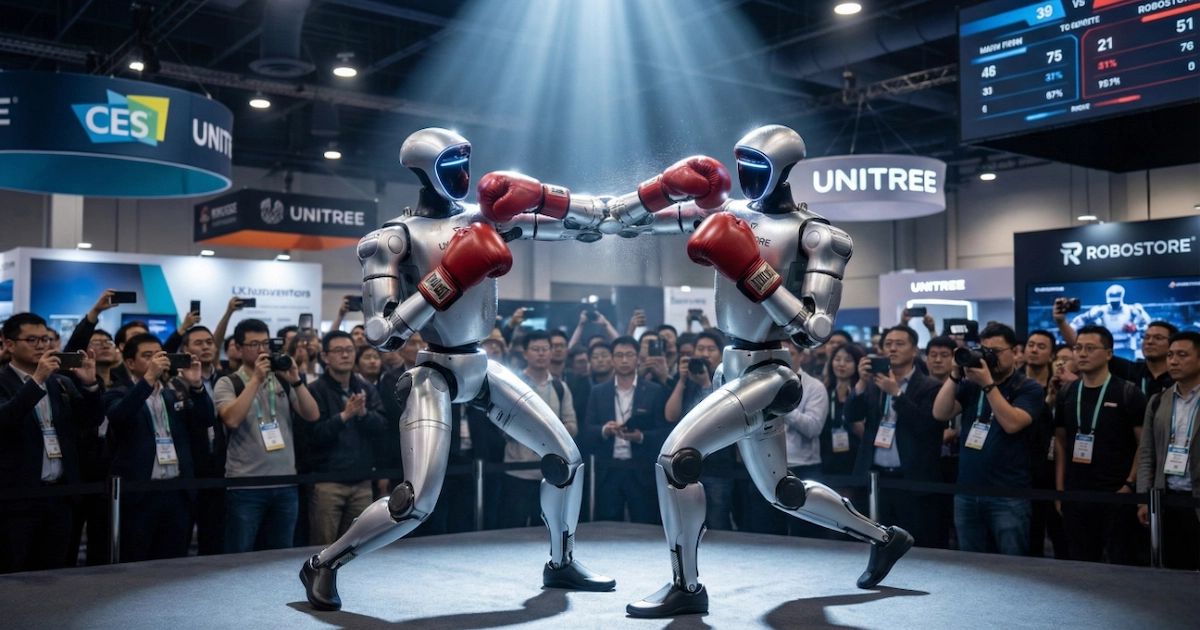
If EngineAI's T800 is the luxury option, Unitree's G1 is the mass-market play. And at CES 2026, two G1 humanoids put on boxing gloves and started fighting each other. Not a scripted demo—actual real-time combat with punches, kicks, and exploitation of openings.
G1 Specifications:
Specification | Details |
Height | 1.3 metres |
Weight | 35 kg |
Degrees of Freedom | 23-43 (configurable) |
Max Joint Torque | 120 Nm |
Walking Speed | 2 m/s |
Sensors | Intel RealSense D435, LIVOX MID-360 3D LiDAR |
Battery Life | 2 hours |
Price | ~$13,500 (~₹11.5 lakh) |
Unitree also unveiled the larger H2 model—1.8 metres tall, 70 kg, with 31 degrees of freedom and up to 360 Nm of torque. The H2 performed backflips and flying kicks in demo videos that went viral weeks before CES. Customer shipments for H2 are scheduled to begin April 2026.
What sets Unitree apart is their explicit focus on scalability. The G1 is foldable, affordable, and designed for mass production. The company announced a Robot-as-a-Service model, suggesting they're thinking beyond one-time hardware sales.
India Angle: At ₹11.5 lakh for the base G1, this enters price territory accessible to Indian research institutions, educational facilities, and even forward-thinking SMEs. Unitree's existing distributor network in Asia could potentially extend to India.
The Catch: The G1 is compact—great for research, but its 35 kg weight and 120 Nm torque limit practical industrial applications. The H2 is more capable but pricier. Still, for anyone tracking the democratization of humanoid robotics, Unitree is the company to watch.
4. Sharpa North: The Ping Pong Champion That Deals Blackjack
Forget industrial applications for a moment. Singapore-based Sharpa brought something different to CES 2026: a humanoid robot named North that plays ping pong with a 0.02-second reaction time and deals blackjack with precision that embarrassed Las Vegas dealers.
North's Capabilities:
Task | Performance |
Ping Pong Reaction | 0.02 seconds |
Photo Capture Precision | ~2mm accuracy |
Card Dealing | Real-time multimodal reasoning |
Paper Windmill Construction | 30+ step autonomous sequence |
The CES demos weren't just impressive—they showcased capabilities that matter for real-world deployment. North's hands feature the SharpaWave system: 22 degrees of freedom per hand, with over 1,000 tactile pixels per fingertip capable of detecting force changes as small as 0.005 newtons.
That sensitivity means North can pluck a playing card from a deck with appropriate delicacy or grip a ping pong paddle with the force needed for aggressive play. The paper windmill demonstration—a 30+ step handicraft sequence—represented one of the longest continuous autonomous manipulation sequences ever publicly demonstrated by a robot.
India Angle: Sharpa's approach targets service industries rather than manufacturing. For India's growing hospitality and entertainment sectors, robots that can interact naturally with customers represent an interesting automation path. The blackjack demo in Vegas wasn't just showmanship—it was a proof-of-concept for service deployment.
The Catch: No pricing announced, and Sharpa positioned North as a platform showcase rather than an immediately available product. The blackjack demo also generated backlash from workers in Vegas concerned about job displacement—a preview of debates India will face as service robots improve.
5. SwitchBot Onero H1: The ₹8.5 Lakh Robot That Actually Does Your Laundry
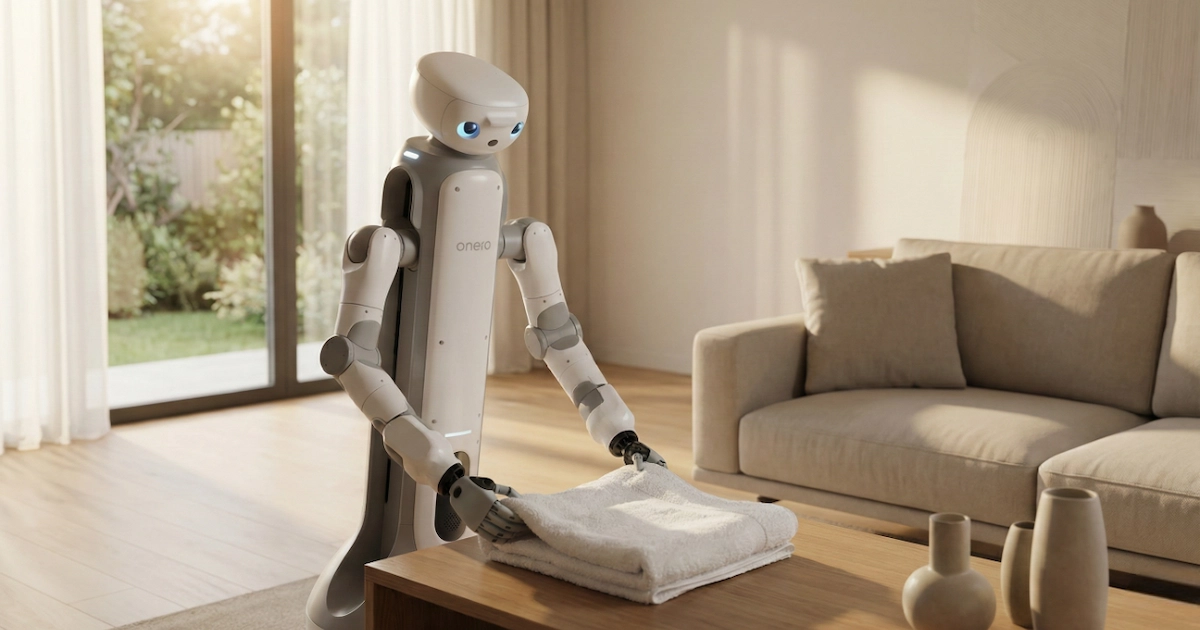
Here's where things get personal. SwitchBot—the company you know for smart curtains and robot vacuums—unveiled a humanoid robot at CES 2026 that can fold your laundry, start your washing machine, and fetch your keys from the couch.
Onero H1 Specifications:
Specification | Details |
Height | 1.3 metres |
Degrees of Freedom | 22 (arms) |
AI System | OmniSense VLA (on-device) |
Navigation | Wheeled base with autonomous driving |
Smart Home Integration | SwitchBot ecosystem |
Target Price | Under $10,000 (~₹8.5 lakh) |
Availability | Pre-orders opening soon, shipping late 2026 |
At the CES booth, Engadget reporters watched Onero H1 pick up clothing from a couch, roll to a washing machine, open the door, place items inside, and close the door. Was it slow? Yes—nearly two minutes for one piece of clothing. Does that matter if it's doing the work while you're at the office? Not really.
SwitchBot's genius move: rather than positioning Onero as a standalone robot, it's the orchestrator of their entire smart home ecosystem. The robot coordinates with SwitchBot vacuums, humidifiers, and smart locks. It's not replacing everything—it's managing everything.
India Angle: At under ₹8.5 lakh, the Onero H1 enters territory where affluent Indian households might genuinely consider it. For dual-income families in metros where domestic help is increasingly expensive and unreliable, a robot that handles mundane tasks has real appeal. SwitchBot already sells products on Amazon India, so distribution channels exist.
The Catch: "Under $10,000" could mean $9,999 or $5,000—SwitchBot hasn't committed to final pricing. And the demo speeds suggest you're trading efficiency for convenience. This is not a robot that's faster than you at folding laundry. It's a robot that folds laundry while you're doing something else.
The Indian Reality Check
Here's what CES 2026 means for India specifically:
For Manufacturing: Hyundai's Atlas deployment at facilities like their Chennai plant is a question of "when," not "if." Indian automotive manufacturers should be monitoring this technology closely—not because robots will replace workers tomorrow, but because competitors who adopt early will have a significant efficiency advantage.
For Consumers: The ₹8.5-21 lakh price range puts humanoid robots in the same category as luxury cars. That's still beyond most Indian households, but it's not beyond all of them. More importantly, prices typically drop 50-70% within 5-7 years of initial production. The ₹3-4 lakh household robot is probably a decade away.
For Startups: If Chinese companies can ship capable humanoids at ₹11-21 lakh, there's an opportunity for Indian players to build on open platforms, develop India-specific applications, and potentially manufacture locally under PLI schemes.
The Verdict: Why CES 2026 Was Different
I've covered CES for years. The robot demonstrations usually follow a pattern: impressive demo, vague promises, and then nothing. This year was different.
Boston Dynamics named customers and timelines. EngineAI published prices. Unitree announced shipping dates. SwitchBot opened pre-orders. These aren't concepts—they're products entering production.
Does this mean a robot will fold your laundry in 2026? For most people, no. But for the first time, the answer isn't "maybe someday." It's "yes, for under ₹8.5 lakh, shipping late 2026."
The robot revolution isn't a sudden event. It's a gradual process with checkpoints. CES 2026 was a major checkpoint. The question isn't whether humanoid robots will become commonplace—it's how quickly the price drops and capabilities improve.
If you're in manufacturing, start planning. If you're a consumer, start budgeting. If you're a skeptic, start updating your timeline.
The robots are here. And this time, they're actually shipping.