![CES 2026 India Preview: 7 "Invisible" AI Trends That Will Run Your Home [First Look]](https://techdodo.in/storage/articles/ces-2026-india-invisible-ambient-ai-preview_1767341328_69577d10aa732_medium.webp)
Quick Answer: CES 2026 (January 6-9, Las Vegas) introduces "invisible" ambient AI that runs homes without voice commands. Samsung, LG, NVIDIA lead with transparent displays and AI-defined appliances. India availability: 3-6 months post-announcement at ₹1 lakh+ for premium categories.
Screens are out. Sensors are in.
When CES 2026 opens its doors on January 6, the world's biggest tech show won't crown another smartphone king or unveil a thinner laptop. Instead, the headline belongs to technology you'll barely notice—AI that disappears into your walls, your appliances, and the ambient hum of your home.
For the first time in CES history, the most valuable innovations aren't things you hold. They're things that watch you.
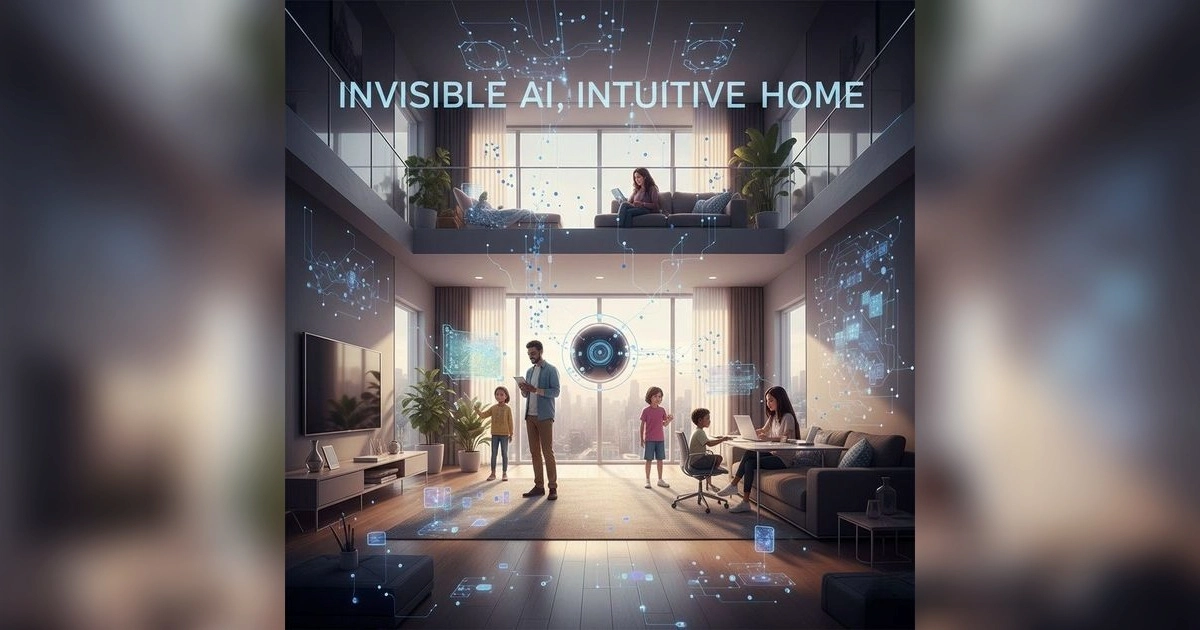
Why the Shift from Gadgets to "Ghost" Tech?
Here's the thing: consumers are exhausted. The average Indian home now has 8-12 connected devices, each with its own app, its own voice wake word, its own notification pile. CES 2026's exhibitors have noticed. The Consumer Technology Association (CTA), which organizes CES, identified three pillars for this year: artificial intelligence, digital health, and automotive technology. But the real throughline? All three are converging on a single idea—ambient intelligence.
Ambient AI doesn't wait for you to say "Hey Alexa." It observes patterns. When your home typically winds down. When someone moves unusually late at night. When behaviour deviates from the norm. Then it acts—adjusting lighting, surfacing a subtle notification, or flagging a potential issue—without requiring a command.
"The goal isn't to create a talking assistant," explains Khurram Hussain, CEO of Irvinei, whose OVAL AI hub debuts at CES 2026. "It's to create intelligence that feels calm, unobtrusive, and supportive—more like a good environment than a gadget."
The Heavyweights: Samsung, LG, and NVIDIA Set the Agenda
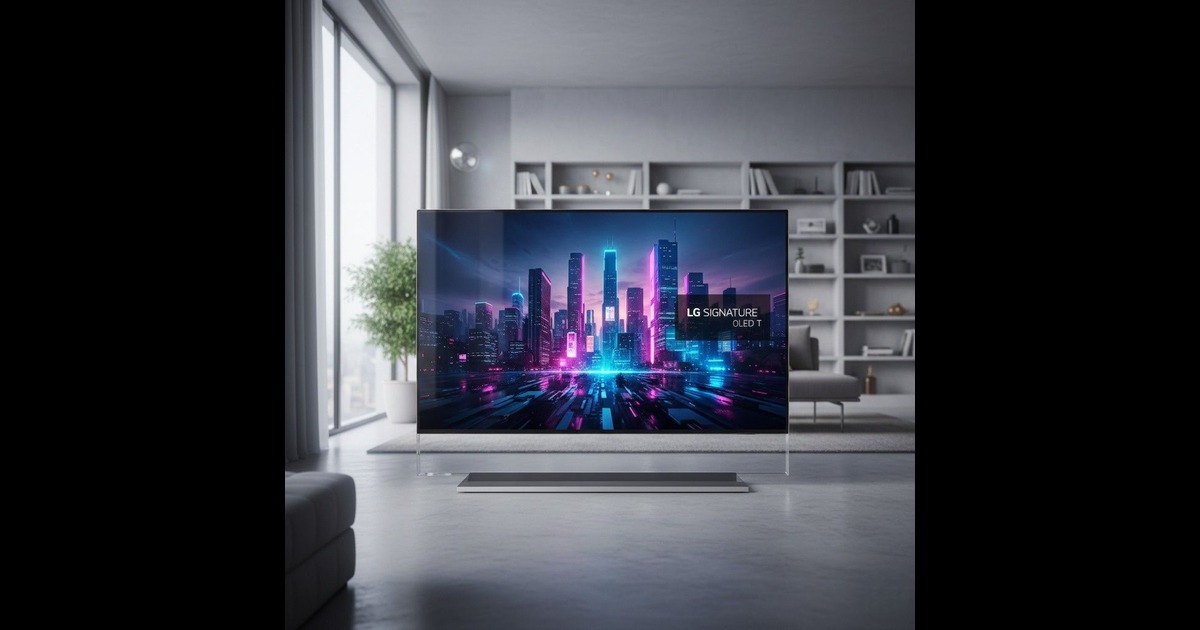
Samsung kicks off CES on January 4 with "The First Look," where CEO TM Roh will outline the company's "AI-driven customer experiences" for 2026. LG follows with its "Affectionate Intelligence" automotive showcase and a stunning lineup of Innovation Award winners, including the world's first wireless transparent OLED TV—the LG SIGNATURE OLED T.
But here's what nobody's talking about: the most consequential presentation might be NVIDIA CEO Jensen Huang's 90-minute keynote on January 5. Huang won't just discuss GPUs. Industry analysts expect a deep dive into "physical AI"—the intelligence that powers robots, autonomous vehicles, and the sensors that make ambient homes possible.
The India Angle: When (and at What Price) Does This Land?
Indian consumers won't see CES 2026's flagship products until mid-2026. Samsung and LG typically launch global announcements in India within 3-6 months. But the pricing? That's where expectations need calibrating.
Product Category | Expected India Price Range | Availability Window |
Premium OLED TVs (55"+) | ₹1.2–2.5 lakh | Q2-Q3 2026 |
Transparent/Lifestyle TVs | ₹2.5–5 lakh+ | Q3-Q4 2026 |
AI Smart Appliances | ₹50,000–1.5 lakh | Q2-Q3 2026 |
Flagship Smart Home Hubs | ₹25,000–60,000 | H2 2026 |
Samsung's Frame TV 55-inch currently sits at ₹87,490 on Samsung India's website. LG's upcoming Gallery TV—a direct Frame competitor with MiniLED and AI ambient adjustment—will likely debut at similar or higher price points. The truly "invisible" transparent OLEDs? Those remain ultra-premium territory, unlikely to drop below ₹2.5 lakh in the Indian market.
The Tech That Actually Matters: What to Watch
Presence sensing without cameras. One of CES 2026's most privacy-conscious innovations uses Wi-Fi signal disturbances to detect occupants and activity patterns—no lens required. For Indian apartments where privacy concerns run high, this could be the acceptable middle ground between "dumb" homes and surveillance-heavy smart systems.
On-device AI processing. Meta's Ray-Ban smart glasses, Oura Ring Gen 4, and dozens of wearables at CES 2026 share a common trait: intelligence that runs locally. No cloud, no latency, no data leaving your device. For Indian users on inconsistent internet connections, edge AI isn't a luxury—it's a necessity.
AI-defined vehicles. Automakers are transitioning from "software-defined vehicles" to platforms where real-time perception and split-second decision-making are foundational. Rivian's autonomy platform and Tesla's next-gen AI5 chip—both built on Arm architecture—promise up to 40x faster AI performance. Indian automotive launches in 2026-2027 will inherit these standards.
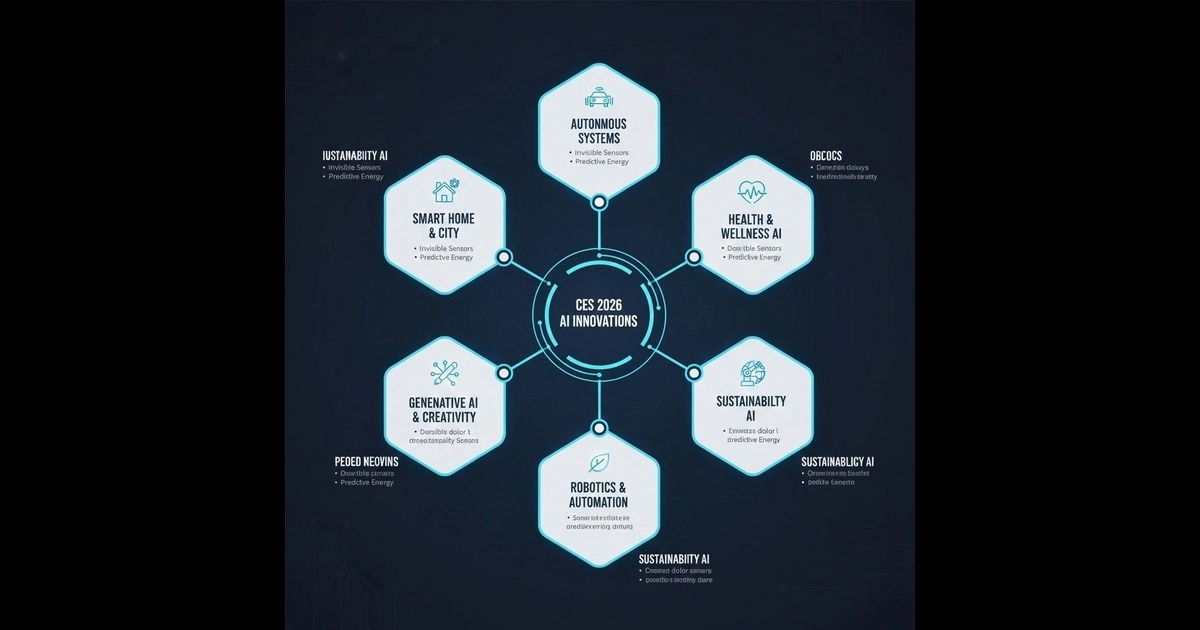
The Catch: Fragmentation Remains the Elephant
And it gets worse. Despite the "invisible" promise, CES 2026's ambient AI has a fundamental problem: every manufacturer's intelligence speaks its own language. LG's AI optimizes for LG appliances. Samsung SmartThings works best within Samsung's ecosystem. Amazon Alexa, Google Home, and Apple HomeKit each deliver powerful experiences inside their own environments—and stumble outside them.
The Matter protocol was supposed to solve this. A panel at CES 2026 will feature SmartThings and Signify leaders discussing cross-ecosystem AI. But for now, Indian buyers assembling smart homes from multiple brands should expect friction, workarounds, and occasional "dumb" moments from their supposedly intelligent systems.
What Experts Disagree On
Not everyone believes the "invisible" narrative. Some analysts argue CES 2026's ambient AI is sophisticated marketing for the same connected device push we've seen for years—just with better sensors and fancier processing. Others counter that edge computing, privacy-first architectures, and presence sensing represent a genuine paradigm shift.
The truth likely sits between. Ambient AI is real, but its seamless, "just works" promise remains 2-3 years away from consumer-ready reality in Indian homes.
Common Questions About CES 2026
What is "ambient intelligence" at CES 2026? Environments that sense, adapt, and respond to human presence without explicit commands—adjusting lighting, temperature, and security autonomously based on learned patterns.
Will CES 2026 products work in Indian homes? Yes, but with caveats. Premium smart home products will support Indian Wi-Fi standards and power requirements. However, features like regional language voice assistants and UPI-integrated purchasing remain manufacturer-dependent.
Is transparent TV technology ready for consumers? LG's OLED T will be the first consumer-available transparent TV, but pricing will limit it to ultra-premium buyers. Mass adoption remains 3-5 years away.
The Verdict: Should Indian Buyers Care?
CES 2026 matters for Indian consumers not because of what launches next week, but because it defines the flagship tier for the next 18 months. The transparent OLEDs, AI-powered refrigerators, and presence-sensing systems debuting in Vegas will trickle down to ₹1 lakh TVs by Q3 2026 and ₹50,000 appliances by 2027.
For now, the smart move is watching, not buying. Let Samsung and LG's India teams localize features, calibrate pricing, and sort out after-sales support before committing ₹1 lakh+ to "invisible" tech that's still learning to see.
We'll update this piece as CES 2026 announcements roll in from January 4-9.