
Best Budget Laptops Under ₹50,000 in India (December 2025)
Here is the harsh truth about buying a laptop in India right now: ₹50,000 is the awkward middle child of the PC market.
Go lower, and you’re buying a Chromebook or something that will choke on a Chrome tab. Go higher (₹70k+), and life is good with MacBooks and AI chips. But right here at ₹50k? It’s a minefield. Manufacturers love to dump their unsold inventory from 2023 on unsuspecting buyers in this price bracket, slapping a "Best Seller" tag on a laptop with a screen that looks like a washed-out ATM display.
But you don’t have ₹80,000. You have ₹50,000. And you need a machine that works.
As of December 2025, the market has finally stabilized. The "inflation tax" is still there, but a few gems have emerged that actually offer price-to-performance that makes sense. We’re talking 16GB of RAM as standard (finally), 13th Gen H-series processors, and even the occasional OLED screen.
Here is how to spend your hard-earned rupees without regretting it six months later.
The "Must-Have" Checklist (Dec 2025 Edition)
Before we name names, let’s set the ground rules. If a laptop doesn’t meet these three criteria, close the tab. Do not pass Go. Do not pay ₹49,990.
- 16GB RAM is Non-Negotiable: Windows 11 (and the upcoming Windows 12 rumors) eats 8GB for breakfast. If you buy an 8GB laptop today, you are buying a paperweight.
- IPS or OLED Display Only: Many brands still sneak in "TN panels" (Twisted Nematic). These look terrible from any angle other than dead-center. If the specs don't say "IPS" or "OLED," assume it’s garbage.
- SSD Storage: This is standard now, but ensure it’s an NVMe M.2 SSD, not an older SATA drive. 512GB is the minimum; 1TB is a luxury.
1. The Performance King: Honor MagicBook X16 Pro (2024/25 Model)
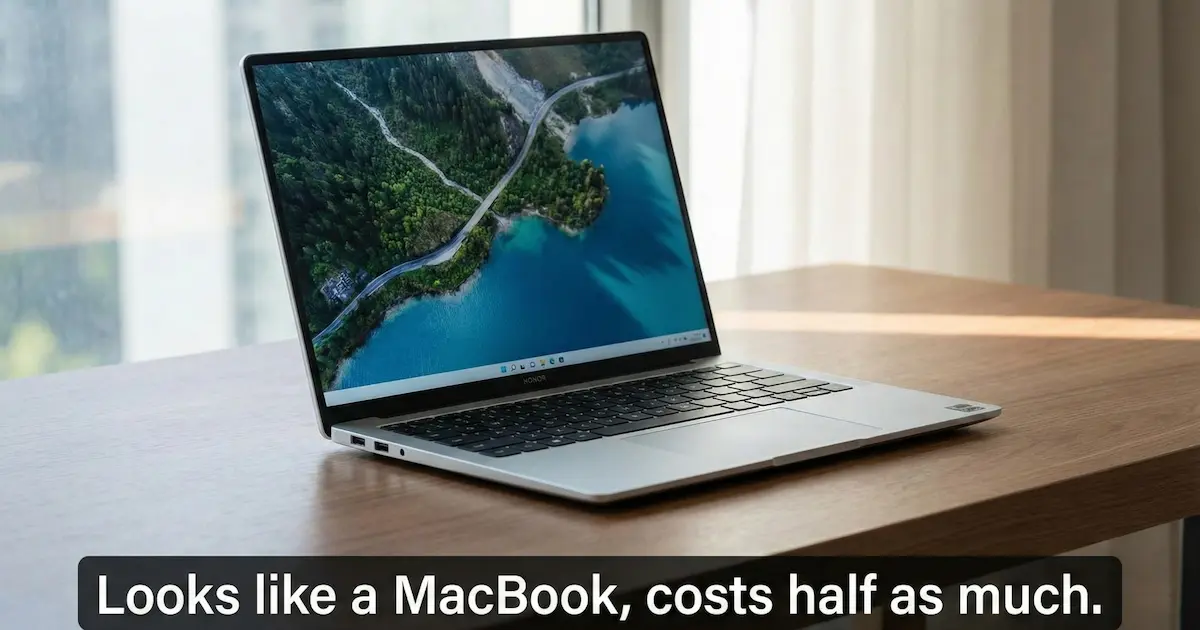
If you care about raw speed for coding, heavy Excel sheets, or 50 Chrome tabs, this is the one to beat. Honor has disrupted the Indian market by putting "H-series" (High Performance) chips in thin-and-light bodies.
- The Heart: Intel Core i5-13420H (13th Gen). The 'H' matters—it runs at higher wattages than the 'U' series found in most rivals.
- The Eyes: 16-inch FHD display with a 16:10 aspect ratio. That extra vertical space is a godsend for documents and code.
- The Build: Aluminum metal body. It feels premium, not like the plastic creak-fest usually found under ₹50k.
The Catch: The webcam is average at best, and service centers aren't as ubiquitous as HP or Dell. But for pure hardware per rupee? It’s unmatched.
Price Check: Often floats around ₹52,000 but drops to ₹46,990 during Amazon/Flipkart sales or with bank offers.
2. The Visual Stunner: ASUS Vivobook Go 15 OLED
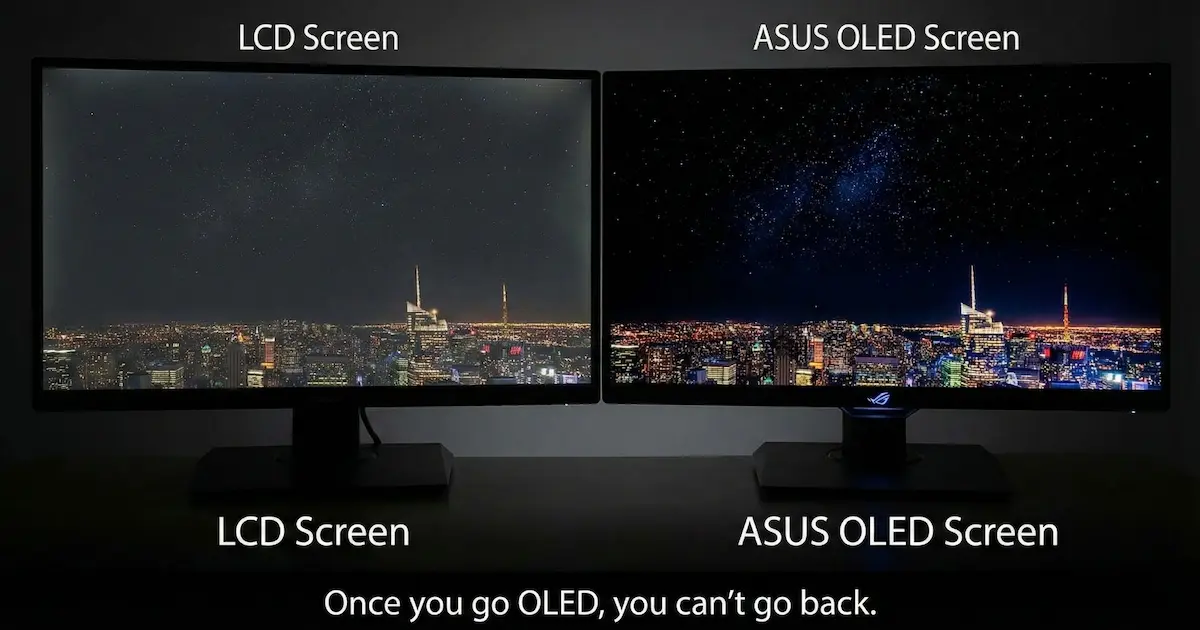
Most budget laptops look grey and sad. This one looks spectacular. ASUS has aggressively pushed OLED panels into the budget segment. If your primary use is Netflix, YouTube, or light photo editing, this screen destroys everything else on this list.
- The Screen: 15.6-inch OLED, 100% DCI-P3 color gamut. Blacks are actually black, not dark grey.
- The Specs: Ryzen 5 7520U, 16GB RAM, 512GB SSD.
- The Reality Check: The processor (Ryzen 5 7520U) is decent for daily tasks but weaker than the Honor’s i5-13420H. It’s built for battery life and media, not compiling heavy code.
Why buy it: You want your laptop to look expensive when you turn it on.
3. The "I Want to Game a Little": Acer Aspire 7
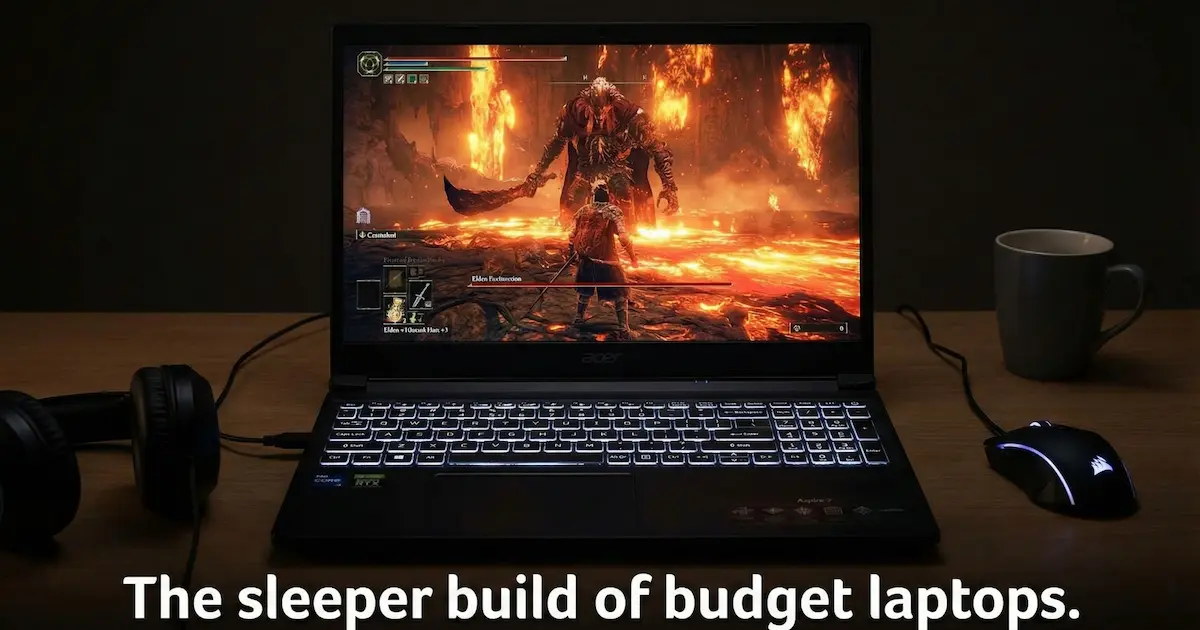
You want to play GTA V, Valorant, or do some basic 1080p video editing, but you have a strict budget. The Aspire 7 is an older chassis design, but it packs a dedicated graphics card.
- The Muscle: Intel Core i5-12450H + NVIDIA RTX 2050 (4GB).
- Why it matters: The RTX 2050 isn't a flagship GPU, but it runs circles around integrated graphics (Iris Xe or Radeon). It enables DLSS, which helps frame rates in modern games.
- The Trade-off: It’s chunky (2.1 kg), the battery life is mediocre (gaming laptops always are), and the screen is just "okay."
Verdict: The only viable option under ₹50k for gamers and engineering students needing CAD software.
4. The Wild Card: Infinix Zerobook 13 (2024/25)
Disclaimer: This is for the risk-takers.
Infinix plays a dangerous game. They offer specs that shouldn't exist at this price point. We've seen the Core i7-13700H variant drop to ₹54,990 (and occasionally under ₹50k with exchange/bank offers).
- The Specs: Core i7-13th Gen, 16GB LPDDR5X RAM, Metal Body.
- The Risk: Software drivers can be finicky, and long-term reliability is less proven than Lenovo or Dell.
- The Reward: If you get a good unit, you have a machine that outperforms laptops costing ₹80,000.
Comparison Table: The "Sub-50k" Survivors
Feature | Honor MagicBook X16 Pro | ASUS Vivobook Go 15 | Acer Aspire 7 | |
Best For | Coding & Office Power | Media & Movies | Gaming & Editing | Durability & Typing |
Processor | i5-13420H (High Perf) | Ryzen 5 7520U (Efficiency) | i5-12450H (High Perf) | i3-1305U / Ryzen 5 |
RAM | 16GB LPDDR4x | 16GB LPDDR5 | 16GB DDR4 | 8GB/16GB (Check carefully!) |
Display | 16" IPS (16:10) | 15.6" OLED | 15.6" IPS (144Hz) | 15.6" IPS/TN (Mix) |
Graphics | Integrated UHD | Integrated Radeon | NVIDIA RTX 2050 | Integrated UHD |
Weight | 1.75 kg | 1.63 kg | 2.1 kg | 1.62 kg |
Current Price | ~₹48,990* | ~₹47,990* | ~₹49,990* | ~₹44,990* |
*Prices in India fluctuate daily based on Flipkart/Amazon sales algorithms. Always check bank offers.
What Experts Disagree On
The "U" vs. "H" Processor Debate
You’ll see listings for "i5-1335U" and "i5-13500H".
- The Efficiency Camp: Argues you should buy U-series (like in the HP 15s or Lenovo Slim) because H-series chips kill battery life in 3 hours.
- The Power Camp: Argues that U-series chips throttle (slow down) too quickly under load.
- My Take: At this budget, battery life is rarely amazing anyway. Get the H-series (Honor/Acer) if you do real work. Get the U-series (ASUS/Lenovo) if you just browse the web and watch lectures.
Buying Advice: The "Red Flags" 🚩
If you are browsing Amazon or Croma right now, watch out for these traps:
- Ryzen 3 7320U: It sounds new because of the "7", but it's actually old technology (Zen 2 architecture). It’s fine for basic use, but don’t pay more than ₹35k for it.
- "HD" Displays (1366x768): In 2025? Absolutely not. Ensure it says "FHD" (1920x1080) or higher.
- Soldered 8GB RAM: Some slim laptops don't let you upgrade RAM. If you buy 8GB soldered, you are stuck with it forever.
Conclusion
If I had to spend my own ₹50,000 today (December 4, 2025), I would buy the Honor MagicBook X16 Pro for work, or the Acer Aspire 7 if I wanted to play games on the side.
The market has improved, but the amount of "junk" has also increased. Stick to the models with 16GB RAM and decent screens, and you’ll be fine for the next 3-4 years.